DeepScribe Alternatives & Competitors: A Clinician's Guide for 2026
DeepScribe has earned a strong reputation in the AI medical scribe space, particularly among large health systems and procedural specialties like oncology
But DeepScribe is not the right fit for every practice.
Its enterprise pricing model ($350–$750/month per provider), lack of a free trial, and delayed note delivery create real friction for independent practices, small groups, and clinicians who need fast, affordable, self-service documentation tools.
If you are evaluating a DeepScribe alternative, this guide compares the six most credible options available in 2026, with specific pricing, feature details, and real switching stories from clinicians who have made the move.
Why clinicians look for a DeepScribe alternative
Based on published reviews and conversations with clinicians who have switched, four issues come up consistently.
Pricing and contract structure
DeepScribe does not publish pricing. Based on available contract data, most providers pay between $350 and $750 per month — and the only way to get a quote is through a sales call. For a 5-provider practice, that can mean $21,000–$45,000 per year before accounting for implementation costs.
For context, the broader cost of AI scribes ranges from free to $400+/month, and many clinically effective options fall well below DeepScribe's price point.
Note turnaround time
DeepScribe historically relied on a human-QA hybrid model, with editors reviewing notes before delivery — a process that introduced delays of hours rather than minutes, a recurring theme in older reviews.
DeepScribe now markets faster, near-real-time delivery, but clinicians evaluating older contracts or reviews should confirm current turnaround directly. For clinicians who want to review and sign notes between patients, real-time delivery remains the expected standard in 2026.
Real-time AI medical transcription has become the expected standard for most ambient scribe products in 2026.
Onboarding and customization friction
DeepScribe requires enterprise onboarding with IT involvement. Its "Customization Studio" allows template adjustments, but clinicians report that meaningful changes still require coordination with DeepScribe's support team. For solo practitioners or small groups without dedicated IT staff, this creates ongoing friction.
Platform and EHR compatibility gaps
DeepScribe integrates deeply with select EHRs like Epic (Hyperdrive), Athena, eCW, ModMed, Flatiron, and Ontada. It does not, however, offer Android support.
Practices using less common EHRs or browser-based systems may find DeepScribe's compatibility insufficient. Bridge Medical Neurology, for example, switched after DeepScribe dropped Practice Fusion support.
Top DeepScribe alternatives compared
The following six tools represent the most viable DeepScribe competitors across different practice sizes and clinical needs. For a broader survey, see our roundup of the best AI scribes for 2026.
1. Freed: Best overall DeepScribe alternative
Pricing
$39–$149/month per provider — Starter $39, Core $79, Premier $104 (billed annually) / $119 (monthly), Groups $149.
Overview
Freed is the most direct DeepScribe alternative for clinicians who want clinical-grade ambient clinical documentation — plus coding and clinical decision support — without enterprise complexity or enterprise pricing. Freed has transcribed 32M+ patient visits with 98% recall on medical terms across 30+ specialties, and holds a 5/5 rating on G2.
Where Freed differs from DeepScribe
- 3–7x lower cost: Freed's Premier plan runs $104/month billed annually — versus DeepScribe's $350–$750/month, that's a 3–7x difference. Even Freed's top-tier Groups plan at $149/month comes in well under half of DeepScribe's entry price.
- Real-time note delivery: Notes are generated and available immediately after the encounter, not hours later.
- Self-service setup: Freed installs in under 2 minutes. There is no IT involvement and no implementation timeline.
- Learn Format: Freed's one-click template customization learns your preferred note structure over time and adapts automatically — no support tickets required. This was a specific pain point cited by users who switched from DeepScribe.
- EHR-agnostic: The Chrome extension approach means Freed works with any browser-based EHR, including systems DeepScribe does not support.
Freed is built for FQHCs and independent clinics as well as larger groups, making it the most versatile option on this list.
For a detailed head-to-head breakdown, see our full Freed vs DeepScribe comparison.
2. Abridge: Enterprise ambient capture for health systems

Pricing
Custom (enterprise contracts)
Overview
Abridge is an enterprise ambient AI platform with a strong Epic-native integration. It is a reasonable DeepScribe alternative for large health systems already committed to Epic who want ambient documentation built directly into the EHR workflow.
However, it shares DeepScribe's enterprise-only sales model — there is no self-service option, no public pricing, and no path for independent practices.
3. Nuance Dragon Copilot: Microsoft/Epic enterprise ecosystem
Pricing
Custom (enterprise contracts)
Overview
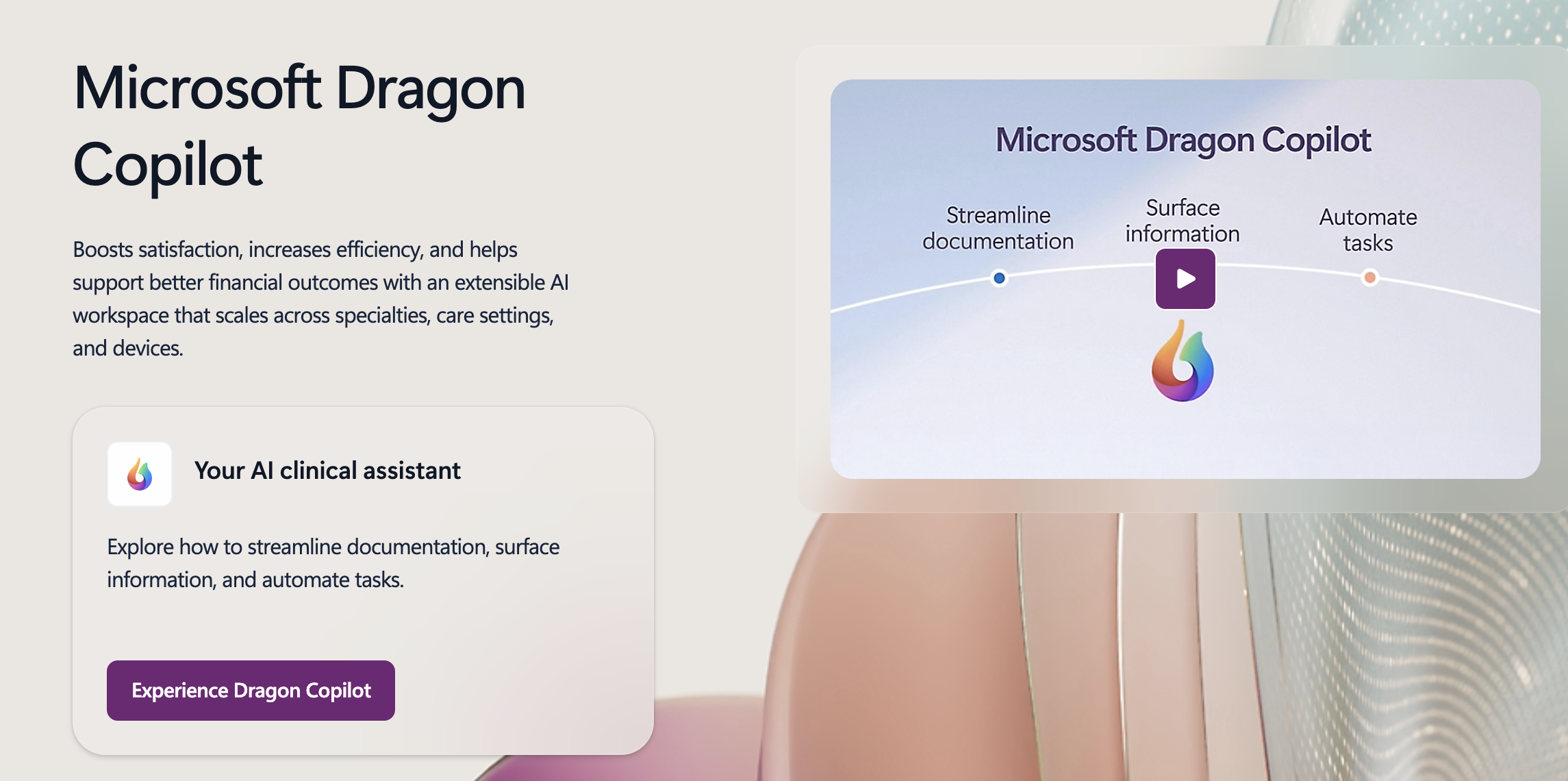
Nuance Dragon Copilot (formerly DAX and now part of Microsoft) is the incumbent player in clinical speech recognition.
Dragon Copilot adds ambient documentation capabilities on top of Dragon's existing voice platform. It is best suited for large organizations already invested in the Microsoft ecosystem. Like DeepScribe, the implementation process is significant and pricing is negotiated at the organizational level.
4. Suki AI: Voice-first AI scribe
Pricing
~$299–$399/month
Overview
Suki takes a voice-first approach, combining ambient listening with voice commands for note editing and EHR navigation. It offers a note-focused tier ($299/month) and a full ambient assistant ($399/month), sitting in a similar price range to DeepScribe.
Suki's broader EHR integration list (30+) is an advantage for practices on less common systems, though the price point still puts it out of reach for many cost-sensitive practices.
5. Heidi Health: Based in Australia with a free tier

Pricing
Free tier available; clinician plan ~$150/month
Overview
Heidi Health offers a low barrier to entry as a DeepScribe alternative, with a free tier.
The paid clinician plan at approximately $150/month (billed annually) is competitive. Heidi has strong traction in Australia and internationally, making it a good option for clinicians outside the US. Feature depth on the free tier is limited, and native EHR push-to-chart only becomes available on Heidi's higher-priced Practice plan — so integration is less robust than purpose-built US-market tools.
6. Doximity Scribe: Free for US physicians
Pricing
Free
Overview
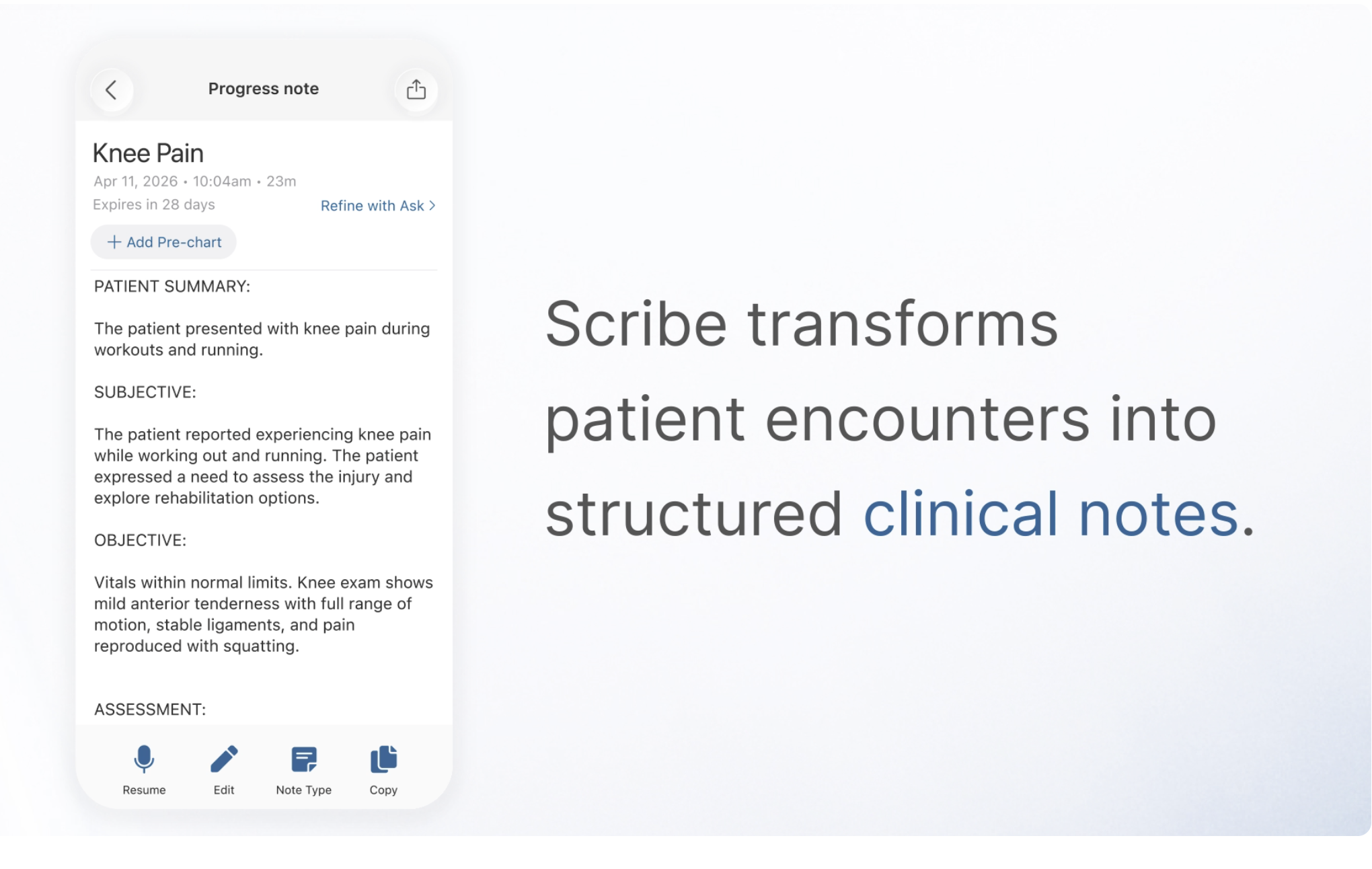
Doximity offers a free AI scribe as part of its physician platform. The price is right, but the feature set is limited: there is no EHR integration (notes must be manually copied), no persistent learning, and limited specialty customization.
It's best understood as a supplementary tool rather than a full DeepScribe replacement.
DeepScribe reviews: Why clinicians switch
DeepScribe is genuinely loved when it's the right fit. . Its 98.8 KLAS satisfaction score and deep Epic Hyperdrive integration reflect genuine clinical value for the organizations it serves.
But different tools fit different practice types and sizes. Here are real reviews from users who switched.
In a verified Capterra review, Leslie D., a healthcare CEO, described DeepScribe as "Expensive, Inefficient" and warned that its auto-renewing contract terms left her locked in "for another 12 months" after paying significantly more than comparable tools. She advised other buyers to look at lower-cost alternatives
Podiatric Surgeon Husang L. told G2 that it "removes pertient findings and plan. and puts things in the wrong sections. It puts objective and assessment IN the subjective. I would state objective findings outload and it will not replace it in the objective section. making it seem like I am contradicting myself."
And One Reddit user noted, "Just not a great product and horribly overpriced. Human transcriber reviews notes, it takes quite a while for the notes to come back. Human editors are quite apparent in the note quality."
However, there are also happy users who cite that the tool is reliable, accurate, and captures the nuance of their visits. When looking for an alternative, its more about what's best for your budget and workflow.
How to choose the right DeepScribe alternative
When evaluating alternatives, focus on these practical criteria:
1. Total cost of ownership
Compare monthly per-provider cost, but also factor in implementation fees, IT time, and contract length. A $39/month tool with instant self-service setup has a very different TCO than a $500/month tool requiring a 6-month implementation.
2. Note turnaround time
If you want to review and sign notes between patients, real-time delivery is non-negotiable.
3. EHR compatibility
Confirm the tool works with your specific EHR via integration or copy/paste functionality. Browser-based approaches (Chrome extensions like Freed's) offer the broadest compatibility.
4. Template control
How quickly can you adjust note format? Do changes require a support ticket, or can you make them yourself?
5. Trial availability
Any tool that does not offer a free trial is asking you to commit significant budget on faith.
For a deeper look at how documentation tools compare across these dimensions, see our medical documentation guidance.
Ready to try a DeepScribe alternative?
If you're evaluating a DeepScribe alternative, the fastest way to compare is with real patients in your real workflow. Freed offers a free trial — no sales call, no IT involvement. Setup takes 2 minutes.

DeepScribe Alternatives & Competitors: A Clinician's Guide for 2026

Table of Contents
DeepScribe has earned a strong reputation in the AI medical scribe space, particularly among large health systems and procedural specialties like oncology
But DeepScribe is not the right fit for every practice.
Its enterprise pricing model ($350–$750/month per provider), lack of a free trial, and delayed note delivery create real friction for independent practices, small groups, and clinicians who need fast, affordable, self-service documentation tools.
If you are evaluating a DeepScribe alternative, this guide compares the six most credible options available in 2026, with specific pricing, feature details, and real switching stories from clinicians who have made the move.
Why clinicians look for a DeepScribe alternative
Based on published reviews and conversations with clinicians who have switched, four issues come up consistently.
Pricing and contract structure
DeepScribe does not publish pricing. Based on available contract data, most providers pay between $350 and $750 per month — and the only way to get a quote is through a sales call. For a 5-provider practice, that can mean $21,000–$45,000 per year before accounting for implementation costs.
For context, the broader cost of AI scribes ranges from free to $400+/month, and many clinically effective options fall well below DeepScribe's price point.
Note turnaround time
DeepScribe historically relied on a human-QA hybrid model, with editors reviewing notes before delivery — a process that introduced delays of hours rather than minutes, a recurring theme in older reviews.
DeepScribe now markets faster, near-real-time delivery, but clinicians evaluating older contracts or reviews should confirm current turnaround directly. For clinicians who want to review and sign notes between patients, real-time delivery remains the expected standard in 2026.
Real-time AI medical transcription has become the expected standard for most ambient scribe products in 2026.
Onboarding and customization friction
DeepScribe requires enterprise onboarding with IT involvement. Its "Customization Studio" allows template adjustments, but clinicians report that meaningful changes still require coordination with DeepScribe's support team. For solo practitioners or small groups without dedicated IT staff, this creates ongoing friction.
Platform and EHR compatibility gaps
DeepScribe integrates deeply with select EHRs like Epic (Hyperdrive), Athena, eCW, ModMed, Flatiron, and Ontada. It does not, however, offer Android support.
Practices using less common EHRs or browser-based systems may find DeepScribe's compatibility insufficient. Bridge Medical Neurology, for example, switched after DeepScribe dropped Practice Fusion support.
Top DeepScribe alternatives compared
The following six tools represent the most viable DeepScribe competitors across different practice sizes and clinical needs. For a broader survey, see our roundup of the best AI scribes for 2026.
1. Freed: Best overall DeepScribe alternative
Pricing
$39–$149/month per provider — Starter $39, Core $79, Premier $104 (billed annually) / $119 (monthly), Groups $149.
Overview
Freed is the most direct DeepScribe alternative for clinicians who want clinical-grade ambient clinical documentation — plus coding and clinical decision support — without enterprise complexity or enterprise pricing. Freed has transcribed 32M+ patient visits with 98% recall on medical terms across 30+ specialties, and holds a 5/5 rating on G2.
Where Freed differs from DeepScribe
- 3–7x lower cost: Freed's Premier plan runs $104/month billed annually — versus DeepScribe's $350–$750/month, that's a 3–7x difference. Even Freed's top-tier Groups plan at $149/month comes in well under half of DeepScribe's entry price.
- Real-time note delivery: Notes are generated and available immediately after the encounter, not hours later.
- Self-service setup: Freed installs in under 2 minutes. There is no IT involvement and no implementation timeline.
- Learn Format: Freed's one-click template customization learns your preferred note structure over time and adapts automatically — no support tickets required. This was a specific pain point cited by users who switched from DeepScribe.
- EHR-agnostic: The Chrome extension approach means Freed works with any browser-based EHR, including systems DeepScribe does not support.
Freed is built for FQHCs and independent clinics as well as larger groups, making it the most versatile option on this list.
For a detailed head-to-head breakdown, see our full Freed vs DeepScribe comparison.
2. Abridge: Enterprise ambient capture for health systems
Pricing
Custom (enterprise contracts)
Overview
Abridge is an enterprise ambient AI platform with a strong Epic-native integration. It is a reasonable DeepScribe alternative for large health systems already committed to Epic who want ambient documentation built directly into the EHR workflow.
However, it shares DeepScribe's enterprise-only sales model — there is no self-service option, no public pricing, and no path for independent practices.
3. Nuance Dragon Copilot: Microsoft/Epic enterprise ecosystem
Pricing
Custom (enterprise contracts)
Overview
Nuance Dragon Copilot (formerly DAX and now part of Microsoft) is the incumbent player in clinical speech recognition.
Dragon Copilot adds ambient documentation capabilities on top of Dragon's existing voice platform. It is best suited for large organizations already invested in the Microsoft ecosystem. Like DeepScribe, the implementation process is significant and pricing is negotiated at the organizational level.
4. Suki AI: Voice-first AI scribe
Pricing
~$299–$399/month
Overview
Suki takes a voice-first approach, combining ambient listening with voice commands for note editing and EHR navigation. It offers a note-focused tier ($299/month) and a full ambient assistant ($399/month), sitting in a similar price range to DeepScribe.
Suki's broader EHR integration list (30+) is an advantage for practices on less common systems, though the price point still puts it out of reach for many cost-sensitive practices.
5. Heidi Health: Based in Australia with a free tier
Pricing
Free tier available; clinician plan ~$150/month
Overview
Heidi Health offers a low barrier to entry as a DeepScribe alternative, with a free tier.
The paid clinician plan at approximately $150/month (billed annually) is competitive. Heidi has strong traction in Australia and internationally, making it a good option for clinicians outside the US. Feature depth on the free tier is limited, and native EHR push-to-chart only becomes available on Heidi's higher-priced Practice plan — so integration is less robust than purpose-built US-market tools.
6. Doximity Scribe: Free for US physicians
Pricing
Free
Overview
Doximity offers a free AI scribe as part of its physician platform. The price is right, but the feature set is limited: there is no EHR integration (notes must be manually copied), no persistent learning, and limited specialty customization.
It's best understood as a supplementary tool rather than a full DeepScribe replacement.
DeepScribe reviews: Why clinicians switch
DeepScribe is genuinely loved when it's the right fit. . Its 98.8 KLAS satisfaction score and deep Epic Hyperdrive integration reflect genuine clinical value for the organizations it serves.
But different tools fit different practice types and sizes. Here are real reviews from users who switched.
In a verified Capterra review, Leslie D., a healthcare CEO, described DeepScribe as "Expensive, Inefficient" and warned that its auto-renewing contract terms left her locked in "for another 12 months" after paying significantly more than comparable tools. She advised other buyers to look at lower-cost alternatives
Podiatric Surgeon Husang L. told G2 that it "removes pertient findings and plan. and puts things in the wrong sections. It puts objective and assessment IN the subjective. I would state objective findings outload and it will not replace it in the objective section. making it seem like I am contradicting myself."
And One Reddit user noted, "Just not a great product and horribly overpriced. Human transcriber reviews notes, it takes quite a while for the notes to come back. Human editors are quite apparent in the note quality."
However, there are also happy users who cite that the tool is reliable, accurate, and captures the nuance of their visits. When looking for an alternative, its more about what's best for your budget and workflow.
How to choose the right DeepScribe alternative
When evaluating alternatives, focus on these practical criteria:
1. Total cost of ownership
Compare monthly per-provider cost, but also factor in implementation fees, IT time, and contract length. A $39/month tool with instant self-service setup has a very different TCO than a $500/month tool requiring a 6-month implementation.
2. Note turnaround time
If you want to review and sign notes between patients, real-time delivery is non-negotiable.
3. EHR compatibility
Confirm the tool works with your specific EHR via integration or copy/paste functionality. Browser-based approaches (Chrome extensions like Freed's) offer the broadest compatibility.
4. Template control
How quickly can you adjust note format? Do changes require a support ticket, or can you make them yourself?
5. Trial availability
Any tool that does not offer a free trial is asking you to commit significant budget on faith.
For a deeper look at how documentation tools compare across these dimensions, see our medical documentation guidance.
Ready to try a DeepScribe alternative?
If you're evaluating a DeepScribe alternative, the fastest way to compare is with real patients in your real workflow. Freed offers a free trial — no sales call, no IT involvement. Setup takes 2 minutes.
FAQs
Frequently asked questions from clinicians and medical practitioners.

Why do clinicians switch from DeepScribe?

Does DeepScribe work with all EHRs?
Is there a free DeepScribe alternative?
How much does Freed cost?
What specialties does Freed support?
Related content
Free yourself for better things


548 Market Street, PMB 95301
San Francisco, CA 94104
Specialties
Compliance & Security
Our technology is HIPAA-compliant, uses industry best practices, and doesn’t store patient recordings.