10 Top Twofold Alternatives & Competitors in 2026
Twofold Health is a strong choice in the AI notes space, especially for behavioral health clinicians who want fast SOAP/DAP/BIRP notes. It typically offers a flat solo subscription with unlimited notes, attractive for behavioral‑health providers who live in progress notes all day.
But it’s not the only option — and it’s not always the best fit. As AI scribes mature, many clinics find themselves wanting:
- More flexible pricing for low or very high visit volumes.
- Deeper EHR connectivity (push to chart, discrete data, coding).
- Different workflows—voice‑first, fully ambient, or human‑backed QA.
- Broader specialty support beyond therapy and behavioral health.
If you’re evaluating Twofold and wondering what else is out there, the tools below represent the best AI scribes on the market right now, from solo‑friendly apps to enterprise‑grade platforms. We compare feature breakdowns, key strengths, and customer references across Reddit, G2, and other press.
TL;DR
- Twofold Health has become a popular AI scribe for outpatient clinicians — especially in behavioral health.
- If you’re comparing Twofold against the wider market, Freed AI is the most versatile overall alternative, with tiered pricing (including a low‑volume plan), options for unlimited notes, and higher‑end tiers that add EHR push and coding.
- Suki, Abridge, and Nuance DAX Copilot excel in voice‑first and enterprise Epic/Cerner workflows.
- Heidi, Nabla, and other freemium tools offer low‑risk ways to test AI scribes.
- DeepScribe, Augmedix, and platform players like DeepCura or OmniMD step in when clinics work in larger hospotal systems or want human QA
- Your preferred Twofold alternatives depend on your visit volume, budget, EHR stack, specialty, and tolerance for setup complexity.
- Clinicians can benefit from trialing 2–3 tools side‑by‑side before committing.
Twofold competitors: summary comparison table
How to choose the right Twofold alternative
Features only matter in practice. Here are 5 factors to help with your decision-making, based on real workflows.
1. How many patients you see
- Low volume (under ~40 notes/month): A lower-cost or capped plan may make more sense than an unlimited subscription.
- High volume: Unlimited plans or tools optimized for speed become more valuable.
2. Your practice size
- Solo clinicians: Simplicity and price matter most.
- 2–10 clinician practices: You’ll start to care about shared workflows, consistency, and scalable pricing — where many tools fall short.
- Larger groups: Admin controls, integrations, and IT alignment become critical.
3. How you like to document
- Template-based (SOAP/DAP): Faster to review, easier to standardize.
- Ambient AI (record and summarize): More hands-off, but may require editing.
- Voice-first (commands): Best for clinicians who prefer dictation inside the EHR.
4. How much editing you’re willing to do
Some tools prioritize speed but require cleanup. Others focus on producing chart-ready notes that need fewer edits, which can reduce the mental load at the end of the day.
5. Your EHR and integration needs
- If you just need copy/paste, most tools work.
- If you want one-click push into your EHR or coding support, your options narrow quickly.
The best Twofold alternatives in 2026
Below, we break down the top AI scribes based on real-world use cases — from solo clinicians testing AI for the first time to growing practices looking for something that scales with them.
1. Freed — The best overall Twofold alternative
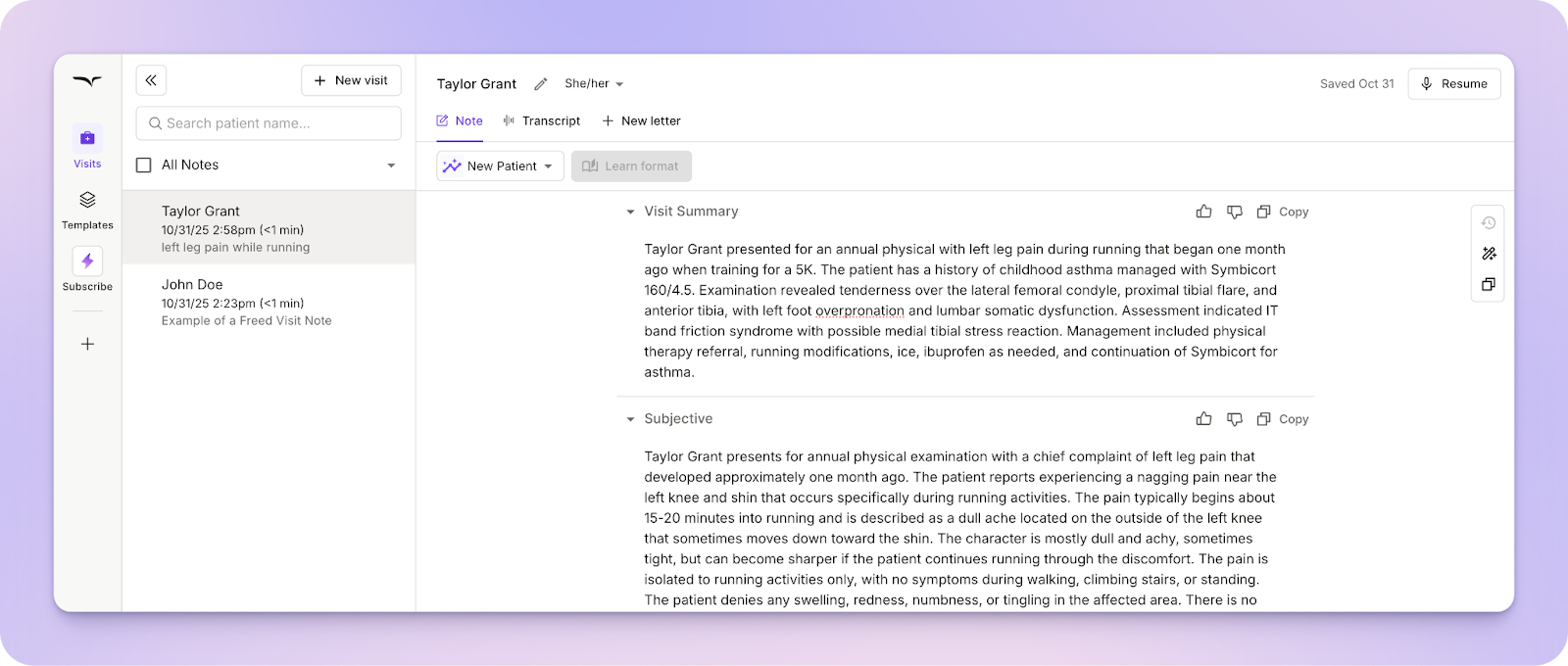
If you like the simplicity of Twofold but want more flexibility — in pricing, workflows, and how your notes integrate into the rest of your day — Freed is often the most natural alternative.
Freed is designed to do more than generate notes. It’s a true clinician assistant that supports before, during, and after the visit.
Who it’s for
- Outpatient clinics and mid-sized practices across primary care, behavioral health, and 100+ specialties
- Solo clinicians through multi‑provider groups.
Features
Key strengths
- Chart-ready notes that reduce after-hours work: Structured, customizable notes that require less cleanup, helping clinicians finish documentation during the day.
- Fast turnaround without disrupting your workflow: Notes are typically generated in seeconds, so you can review and move on quickly between visits.
- Works across real-world clinical environments: Supports in-person and telehealth across devices, so you don't change how you practice.
- Handles real-world speech patterns: Translates 90+ languages including English, Spanish, Mandarin, Italian, and German.
- Built with security at the core: Encryption in transit and at rest, with HIPAA-aligned infrastructure and data handling practices.
- Human support when you need it: Access to real support and onboarding resources to help you improve note quality and get value quickly.
- Grows with your practice
From solo clinicians to mid-sized clinics, Freed scales without requiring new tools or workflows, with admin dashboards and template sharing.
Pricing
Freed offers affordable, flexible pricing tiers:
- 7‑day free trial (no credit card).
- Starter: $39/mo (1 clinician, up to 40 notes/month).
- Core: $79/mo (everything in Starter plus unlimited note generation, instant template builder, AI assistant for editing).
- Premier: $104/mo when billed annually (standard $119/mo monthly) with the full suite of tools and integrations.
- Groups: custom pricing with additional admin, onboarding, and team features.
Clinician reviews
Freed vs. Twofold
- Often more attractive pricing for very low or very high note volumes because of tiered plans.
- Adds EHR push and coding at the top tier—capabilities that are typically on the future roadmap for note‑only tools.
- Slightly broader cross‑specialty orientation vs. Twofold’s deep behavioral‑health focus.
If you compare Freed vs. Twofold and are hesitant to lock into a single unlimited plan, Freed gives you an on‑ramp that can grow with your caseload and integration needs.
2. Suki AI — Voice‑first dictation and commands
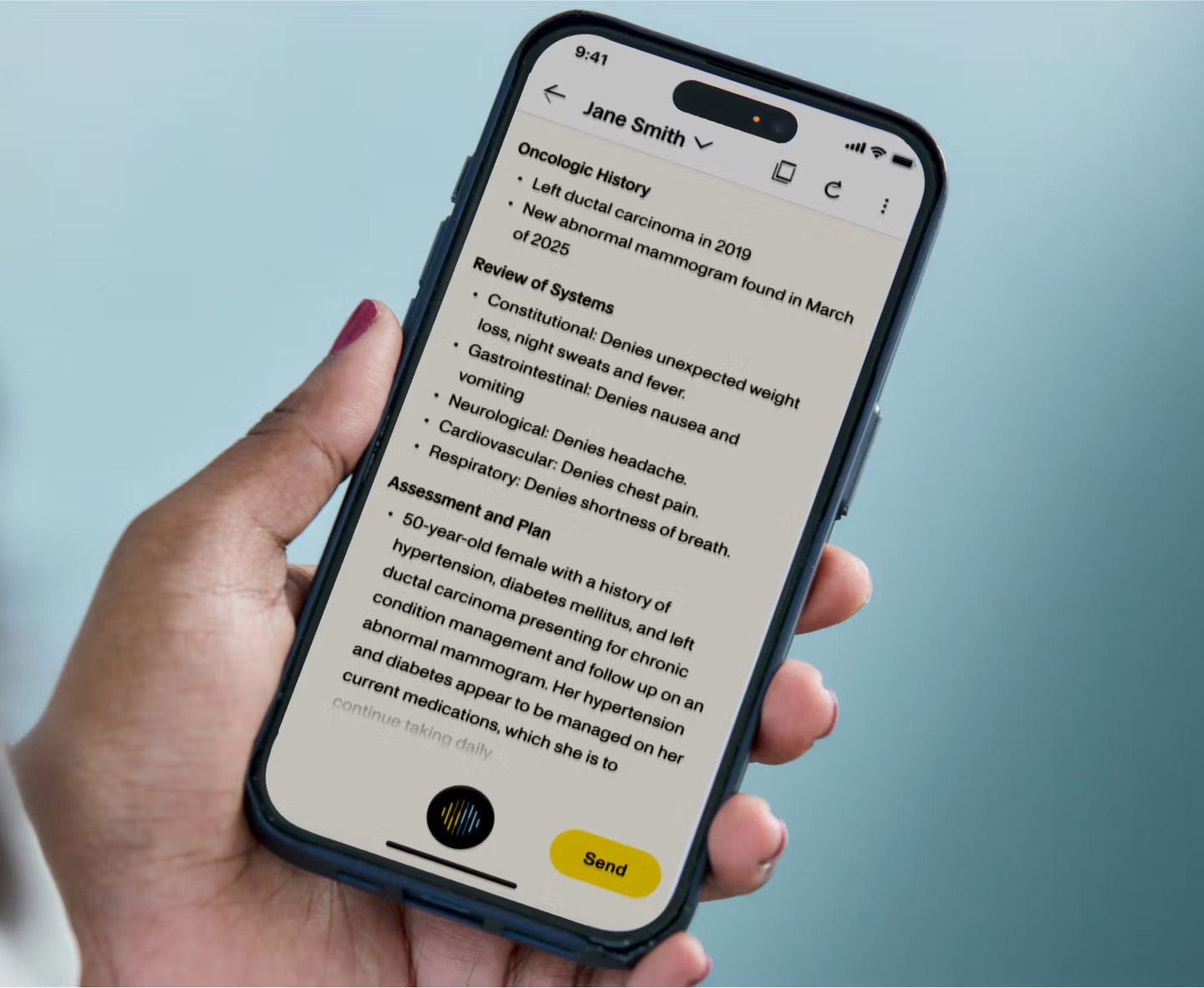
Suki sits at a different price and complexity band but is relevant if your main requirement is a voice‑driven workflow inside major EHRs.
Who it’s for
- Physicians who spend most of their day in Epic or Cerner.
- Clinicians who prefer talking to their EHR (“Suki, add BP 128/76”) instead of reviewing generated summaries.
Key strengths
- Voice commands and dictation: Suki enables conversational control over charting functions—adding vitals, updating the problem list, dictating assessments, etc.
- EHR‑centric workflow: It’s designed to live alongside or inside Epic and Cerner rather than purely as a stand‑alone app.
- Time savings: Many case studies report documentation dropping from double‑digit weekly hours to a few minutes a day when used consistently.
Clinician reviews
“As for reducing documentation time I would say no because I know that some of our providers would review the note and fix it up after Suki had done its thing, taking up more time overall.” – Reddit
“If you have trouble with documentation, and if you’re looking for a strategy that can make a difference, this may be a worthy candidate so I encourage you to check it out.” – Dr. Steven Waldren, YouTube review
Suki vs. Twofold
- A flat monthly fee that’s several times higher than most Twofold‑style apps, putting it in a premium category. Suki is 2-3x more expensive than many alternatives.
- Best results typically require good hardware and some IT coordination.
- Great for hospital‑based or multi‑specialty physicians; somewhat overpowered for a solo therapist who mainly wants quick SOAP notes.
If you’ve tried a template‑based tool like Twofold and find yourself craving a pure “talk to your EHR” experience, Suki is usually on the short list of alternatives.
3. Abridge — Enterprise ambient capture + patient recaps
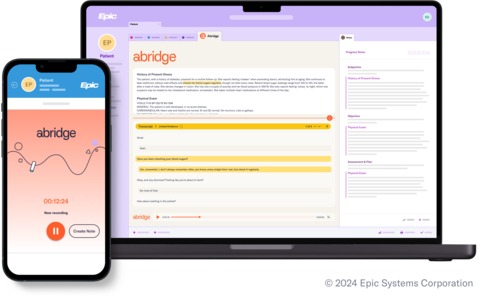
Abridge is one of the leading names in ambient documentation for large health systems.
Who it’s for
- Health systems and large groups that want to standardize ambient capture across departments.
- Organizations invested heavily in Epic that value App Orchard‑listed partners and rigorous IT vetting.
Key strengths
- Dual outputs: For each encounter, Abridge produces both a clinician‑ready note and a patient‑friendly recap, improving transparency and understanding.
- Enterprise integrations: Tight integrations with Epic and other major EHRs, including structured data mapping and in‑workflow experiences.
- Proven deployments: Used in large systems, often across primary care, cardiology, and multiple specialties.
Clinician reviews
“Great summary of encounters, comprehensive prose and good plan and patient summary” – G2
“My only gripe at this point is that there is no way to integrate the way it generates an A/P with existing smartphrases like .diagmed or .probccm. I have to spend a little time copy, pasting, and pruning with that. But otherwise, wow.” – Reddit
Abridge vs. Twofold
- Usually quote‑based and negotiated at the enterprise level, not a simple solo subscription.
- Implementations involve IT, security reviews, and potentially hardware.
- Typically procured by the organization, not individual clinicians.
For a solo clinician looking for Twofold alternatives, Abridge is more of a “future state” option; for hospital leaders, it’s a direct contender in the enterprise ambient space.
4. Microsoft DAX Copilot — Deep Epic and Cerner integration
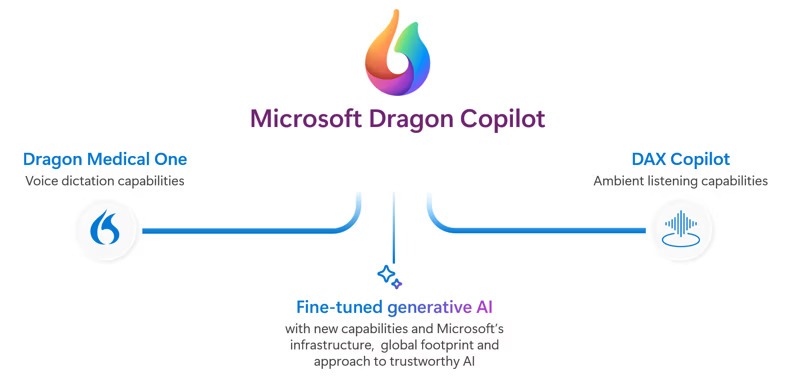
Microsoft Dragon Copilot is another heavyweight in the ambient documentation arena, especially for organizations already using Nuance for voice and transcription.
Who it’s for
- Large health systems and multi‑specialty groups.
- Practices deeply embedded in Epic and Cerner that want documentation generated directly inside those environments.
Key strengths
- In‑EHR drafting: Auto‑drafts HPI, assessment/plan, referrals, and letters directly in Epic/Cerner.
- Enterprise comfort: Backed by Nuance/Microsoft, which many IT departments already trust and work with.
- Scale: Built for hundreds or thousands of users across complex orgs.
Clinician reviews
"I am only on day 3 of this new AI charting. It is life changing. I went home on time, my notes were better, I was able to spend more time with patients... I didn't feel "stressed" at the pile up of notes that weren't getting done, and my ADD didn't have to be battled to get the notes started. Anybody else? Now if I could figure out how to get procedure / ECG notes entered..." — Reddit
DAX Copilot vs. Twofold
- Often structured on a per‑encounter or enterprise contract basis.
- Requires IT coordination, training, and sometimes specific audio hardware.
- A fit for hospital‑level deployments, not a casual alternative for a solo therapist weighing a $49/month app.
When your organization is already a heavy Nuance/Microsoft customer, DAX Copilot may be the natural comparison point to Twofold‑style tools, but it’s a very different scale of solution.
5. Heidi Health — Freemium ambient notes
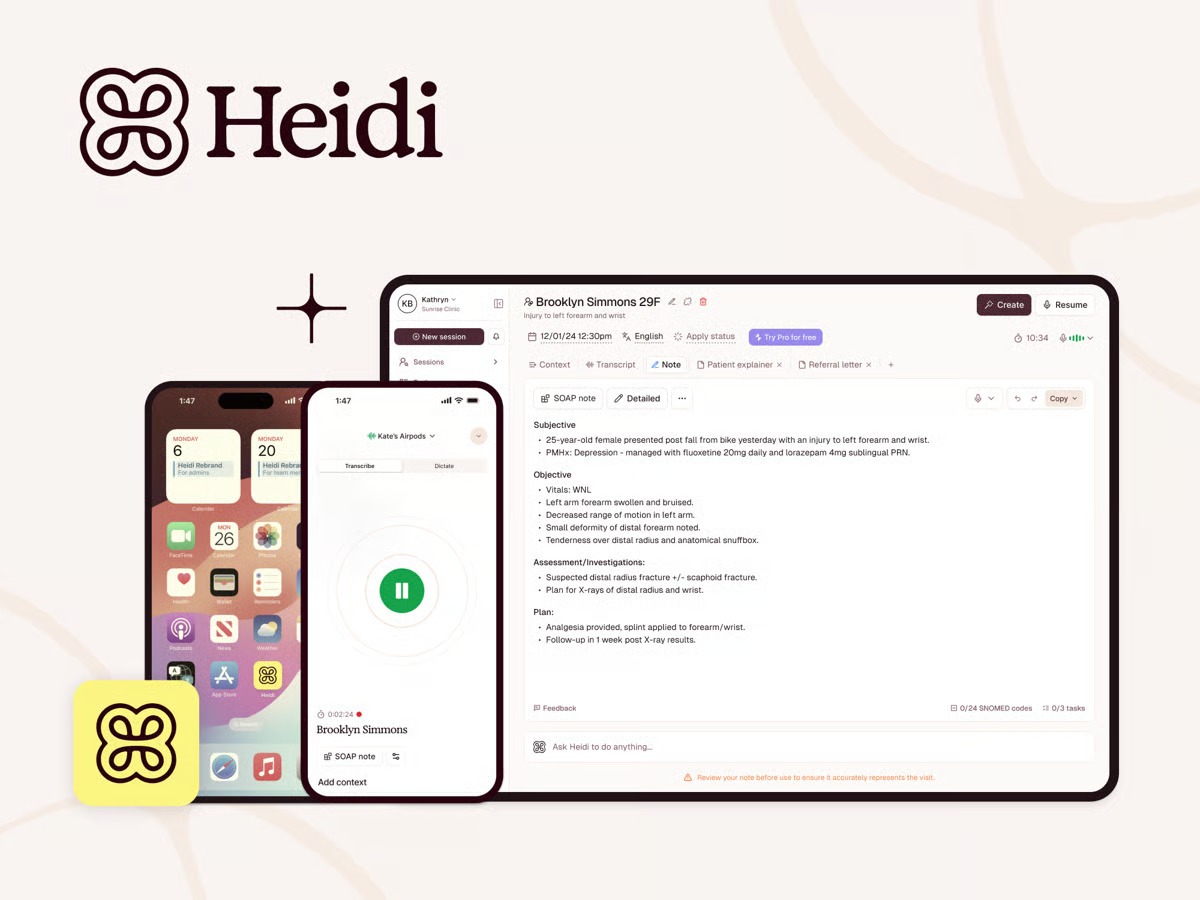
Heidi occupies the freemium segment of the AI notes market and is often where clinicians go when they want to try AI scribes without pulling out a credit card.
Who it’s for
- Cost‑sensitive solo clinicians.
- Providers who want to “dip a toe” into AI documentation before paying.
Key strengths
- Free tier: Generates structured notes (often SOAP‑style) with no upfront cost, albeit with limits on volume or features.
- Fast summaries: Delivers notes in seconds, similar to other ambient tools.
- Upgrade path: Paid plans unlock higher throughput, more customization, and sometimes shorter processing queues.
Clinician reviews
“Heidi has incredible "ambient listening" that can take an entire examination and summarize it into any template you create (or pre-made templates) with the level of specificity you select, just by listening to the patient encounter. “ – G2
Heidi vs. Twofold
- Some clinicians find Heidi’s default outputs a bit verbose and may need to trim.
- Freemium tools typically have more limited integration options than paid mid‑market tools.
- BAAs and data retention policies may vary between free and paid tiers, which matters if you handle PHI.
Heidi is one of the reasonable alternatives if your main reason for not adopting something like Twofold is budget or commitment.
6. Nabla Copilot — Freemium visit‑capped model
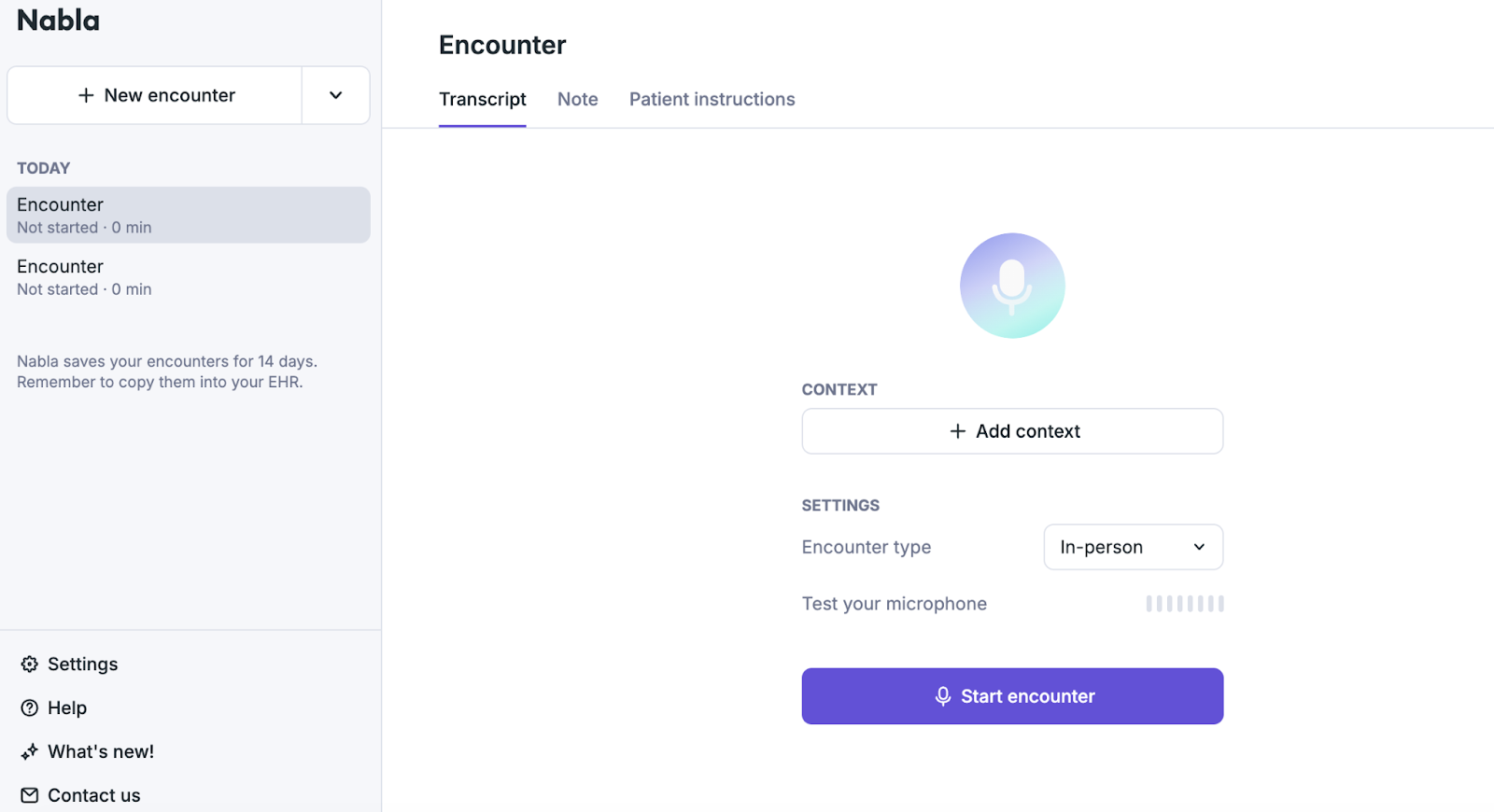
Nabla Copilot offers another flavor of freemium experience, often with visit caps and GPT‑style structured outputs.
Who it’s for
- Residents and trainees trying AI scribes on a limited budget.
- Clinicians who chart relatively few visits per month and don’t want an unlimited plan.
Key strengths
- Visit‑based freemium: A limited number of free visits per month that can suffice for low‑volume use or testing.
- Structured notes: Outputs that map to familiar medical note formats, easing copy‑paste back into the EHR.
- On‑ramp to paid: Upgrade paths for clinicians who outgrow the free tier.
Clinician reviews
“Same vibe as Freed, clean UI, but felt bare-bones. If you want something super simple, it’ll do the trick, but I needed more control and accuracy. Lacks a lot of specialty/custom options.” – Reddit
Nabla Copilot vs. Twofold
- If you see many patients, the free caps become restrictive and you’ll end up on a paid tier anyway.
- As with other freebies, BAAs and retention policies can differ by tier.
- Template and specialty depth may not match tools built primarily for therapists and behavioral‑health providers.
Nabla is a logical compare and contrast option if you’re exploring the freemium universe but think you might graduate to a more robust system later.
7. DeepScribe — Hybrid AI + human QA
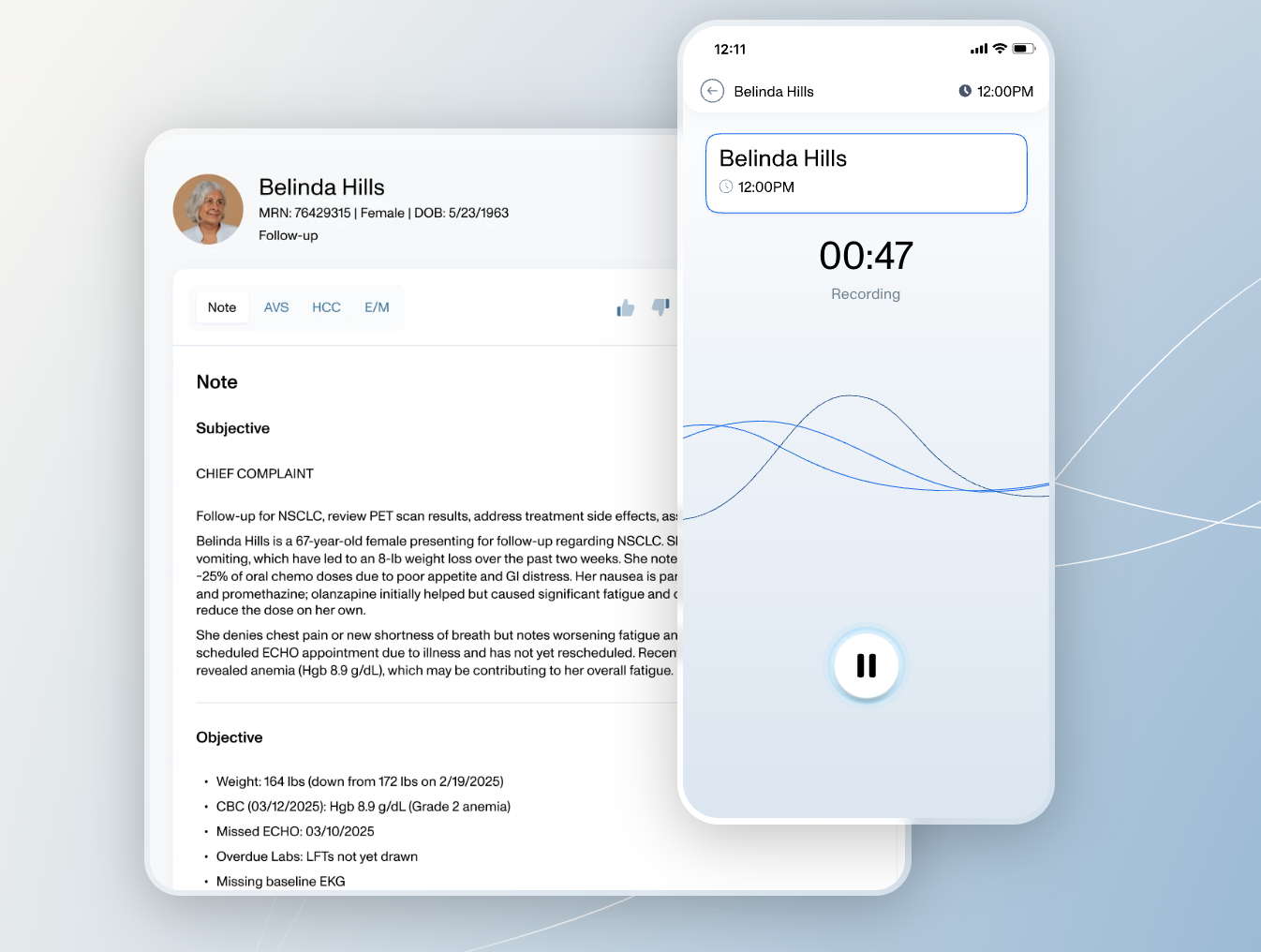
DeepScribe straddles the line between a pure AI app and a human scribe service.
Who it’s for
- Clinics in high‑risk or complex documentation environments.
- Providers who want products with AI efficiencies but insist on a human reviewing each note.
Key strengths
- Hybrid workflow: AI drafts the note, then human reviewers refine it for clarity and completeness.
- Quality focus: Clinics often choose DeepScribe when they are especially sensitive to missed details or nuanced assessments.
- Support: Many users appreciate the ability to give feedback and see the product improve over time with human involvement.
Clinician reviews
“I am very impressed by how well the DeepScribe AI captured the natural patient interview and exam and then uploads it seamlessly into my specific electronic health records. It is in many ways more detailed than I have ever been without any extra time.” – Capterra
DeepScribe vs. Twofold
- Turnaround is usually minutes rather than seconds.
- Higher than self‑serve AI apps due to human labor.
- Best suited to clinics willing to pay for an extra layer of QA vs. those who want pure software efficiency.
For clinicians who’ve tried tools like Twofold and Freed but remain uneasy about fully automated notes, hybrid options like DeepScribe can feel like a safer bridge.
8. Augmedix — Live remote scribes
Augmedix operates closer to traditional scribing, pairing live human scribes with modern tooling.
Who it’s for
- Busy specialists and high‑volume clinics that want documentation completely off their plate.
- Organizations that can budget for per‑provider scribe services in the $1,000+/month range.
Key strengths
- Live scribes: Real humans listen to encounters and draft chart entries in real time.
- Coverage: Dozens of specialties supported, including complex and procedure‑heavy disciplines.
- Accuracy: High accuracy targets and QA processes, which some clinicians still prefer over pure AI.
Clinician reviews
“Augmedix scribes have made my day much more efficient. I used to try to cram in a few minutes of dictation between patients, or worse, save them all for the end of the day. Now the dictation is done when I leave the patient.” – G2
Augmedix vs. Twofold
- Orders of magnitude more expensive than a solo subscription‑based AI scribe.
- Overkill for a single therapist or solo primary care doctor who could be well served by an AI notes app.
- Scheduling scribes, managing coverage, and coordinating across time zones.
Augmedix is less a direct competitor to Twofold and more a “do it for me” alternative in the same problem space.
9. DeepCura — AI agents for scribe + coding + more
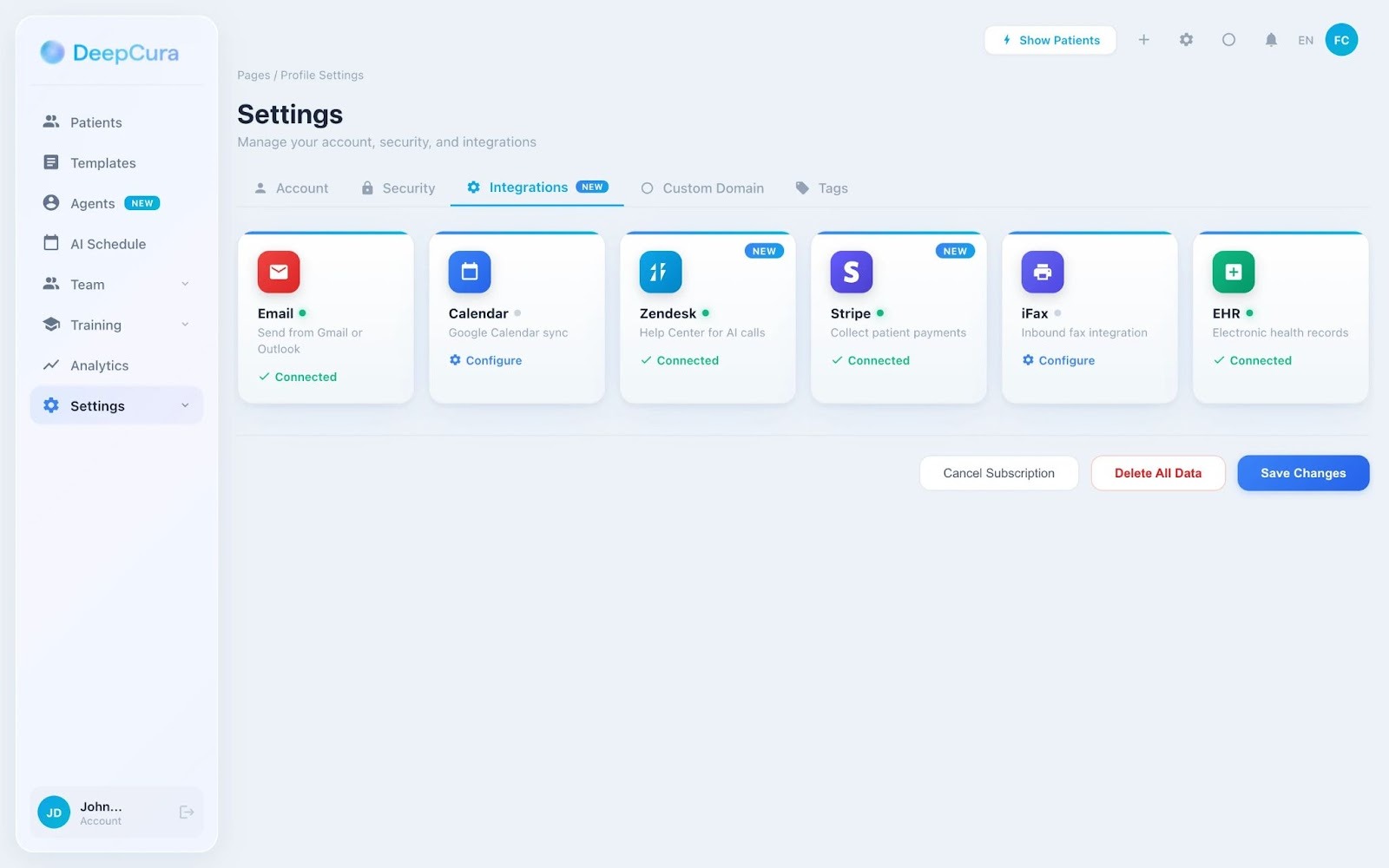
DeepCura’s AI agent approach expands the scope beyond just note generation.
Who it’s for
- Clinics that see AI scribes as a gateway to automating more of the documentation and coding process.
- Practices that want discrete data mapped into their EHR alongside narrative notes.
Key strengths
- Multiple agents: Not just a scribe, but also coding and intake agents that work together.
- EHR focus: Designed to interact closely with practice management and EHR workflows.
- Specialty breadth: Often highlighted in emergency medicine, primary care, and other high‑volume settings.
Clinician reviews
“This feels as though it ultimately increases quality of clinical care. I appreciate that documentation can be sent easily to patients or exported to necessary providers. It is exciting to think that patients will be able to retain more information/next steps from the session.” – G2
“I’ve tried several and my absolute favorite is DeepCura. They have a free trial.” – Reddit
DeepCura vs. Twofold
- More of a platform than a single app; implementation may require more planning.
- Best for clinics that are ready to re‑think multiple parts of the workflow, not just progress notes.
- Typically higher‑end than solo‑oriented apps, but still lower than live scribe services.
If you’re evaluating Twofold or Freed and simultaneously planning to modernize coding and intake, a platform like DeepCura becomes relevant.
10. OmniMD — EHR‑centric automation
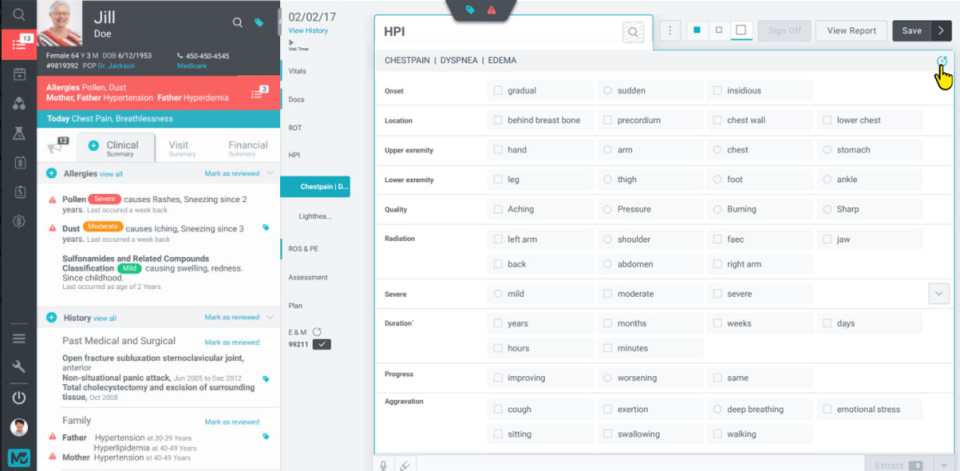
OmniMD pairs an AI scribe with a full EHR and RCM stack, targeting clinics that want closer integration across products rather than a stand‑alone scribe.
Who it’s for
- Practices willing to consider an EHR change or deep new integration in exchange for tighter automation.
- Clinics seeking one vendor for charting, revenue cycle, and documentation assistance.
Key strengths
- Native integration: The AI scribe is embedded in the EHR, enabling direct mapping of note content into structured chart fields.
- RCM linkage: Documentation quality tied directly to coding and billing workflows.
- All‑in‑one: One contract covers EHR, scribe, and often add‑on modules.
What clinicians say
- “Thanks to OmniMD, our practice is thriving with an EHR system that enhances efficiency and supports patient care at every level. If you’re looking for a modern, reliable, and forward-thinking healthcare solution, I wholeheartedly recommend OmniMD.” – Capterra
OmniMD vs. Twofold
- Switching or adding an EHR is a major project.
- You tie your scribe experience to a broader platform choice.
- Typically evaluated by administrators and IT, not just frontline clinicians.
For clinics on the cusp of an EHR transition, OmniMD‑style offerings compete less with Twofold and Freed as apps, and more as comprehensive infrastructure choices.
In conclusion
Twofold and similar tools helped prove something important: AI can reliably handle everyday charting, especially in behavioral health and outpatient care. For clinicians who want fast, template-driven notes and a simple, flat pricing model, it remains a solid option.
But as your workflow evolves, what you need from an AI scribe often changes.
Freed is built for that next step — delivering chart-ready notes that reduce editing, flexible pricing that meets you where you are, and workflows that scale from solo clinicians to growing practices. It’s designed not just to generate notes, but to lighten the mental load of documentation across your entire day.
Around it, a broader ecosystem — from Suki and Abridge to Heidi, DeepScribe, and DeepCura — offers strong options depending on how you prefer to work, whether that’s voice-first, enterprise-integrated, or human-reviewed.
The best choice ultimately comes down to fit: your patients, your schedule, your practice.
If you’re evaluating alternatives, try two or three tools that align with how you actually work. Then stick with the one that helps you close charts faster, think less about documentation, and get back to focusing on your patients.
Ready to feel the difference? Try Freed for free.


Table of Contents
Twofold Health is a strong choice in the AI notes space, especially for behavioral health clinicians who want fast SOAP/DAP/BIRP notes. It typically offers a flat solo subscription with unlimited notes, attractive for behavioral‑health providers who live in progress notes all day.
But it’s not the only option — and it’s not always the best fit. As AI scribes mature, many clinics find themselves wanting:
- More flexible pricing for low or very high visit volumes.
- Deeper EHR connectivity (push to chart, discrete data, coding).
- Different workflows—voice‑first, fully ambient, or human‑backed QA.
- Broader specialty support beyond therapy and behavioral health.
If you’re evaluating Twofold and wondering what else is out there, the tools below represent the best AI scribes on the market right now, from solo‑friendly apps to enterprise‑grade platforms. We compare feature breakdowns, key strengths, and customer references across Reddit, G2, and other press.
TL;DR
- Twofold Health has become a popular AI scribe for outpatient clinicians — especially in behavioral health.
- If you’re comparing Twofold against the wider market, Freed AI is the most versatile overall alternative, with tiered pricing (including a low‑volume plan), options for unlimited notes, and higher‑end tiers that add EHR push and coding.
- Suki, Abridge, and Nuance DAX Copilot excel in voice‑first and enterprise Epic/Cerner workflows.
- Heidi, Nabla, and other freemium tools offer low‑risk ways to test AI scribes.
- DeepScribe, Augmedix, and platform players like DeepCura or OmniMD step in when clinics work in larger hospotal systems or want human QA
- Your preferred Twofold alternatives depend on your visit volume, budget, EHR stack, specialty, and tolerance for setup complexity.
- Clinicians can benefit from trialing 2–3 tools side‑by‑side before committing.
Twofold competitors: summary comparison table
How to choose the right Twofold alternative
Features only matter in practice. Here are 5 factors to help with your decision-making, based on real workflows.
1. How many patients you see
- Low volume (under ~40 notes/month): A lower-cost or capped plan may make more sense than an unlimited subscription.
- High volume: Unlimited plans or tools optimized for speed become more valuable.
2. Your practice size
- Solo clinicians: Simplicity and price matter most.
- 2–10 clinician practices: You’ll start to care about shared workflows, consistency, and scalable pricing — where many tools fall short.
- Larger groups: Admin controls, integrations, and IT alignment become critical.
3. How you like to document
- Template-based (SOAP/DAP): Faster to review, easier to standardize.
- Ambient AI (record and summarize): More hands-off, but may require editing.
- Voice-first (commands): Best for clinicians who prefer dictation inside the EHR.
4. How much editing you’re willing to do
Some tools prioritize speed but require cleanup. Others focus on producing chart-ready notes that need fewer edits, which can reduce the mental load at the end of the day.
5. Your EHR and integration needs
- If you just need copy/paste, most tools work.
- If you want one-click push into your EHR or coding support, your options narrow quickly.
The best Twofold alternatives in 2026
Below, we break down the top AI scribes based on real-world use cases — from solo clinicians testing AI for the first time to growing practices looking for something that scales with them.
1. Freed — The best overall Twofold alternative
If you like the simplicity of Twofold but want more flexibility — in pricing, workflows, and how your notes integrate into the rest of your day — Freed is often the most natural alternative.
Freed is designed to do more than generate notes. It’s a true clinician assistant that supports before, during, and after the visit.
Who it’s for
- Outpatient clinics and mid-sized practices across primary care, behavioral health, and 100+ specialties
- Solo clinicians through multi‑provider groups.
Features
Key strengths
- Chart-ready notes that reduce after-hours work: Structured, customizable notes that require less cleanup, helping clinicians finish documentation during the day.
- Fast turnaround without disrupting your workflow: Notes are typically generated in seeconds, so you can review and move on quickly between visits.
- Works across real-world clinical environments: Supports in-person and telehealth across devices, so you don't change how you practice.
- Handles real-world speech patterns: Translates 90+ languages including English, Spanish, Mandarin, Italian, and German.
- Built with security at the core: Encryption in transit and at rest, with HIPAA-aligned infrastructure and data handling practices.
- Human support when you need it: Access to real support and onboarding resources to help you improve note quality and get value quickly.
- Grows with your practice
From solo clinicians to mid-sized clinics, Freed scales without requiring new tools or workflows, with admin dashboards and template sharing.
Pricing
Freed offers affordable, flexible pricing tiers:
- 7‑day free trial (no credit card).
- Starter: $39/mo (1 clinician, up to 40 notes/month).
- Core: $79/mo (everything in Starter plus unlimited note generation, instant template builder, AI assistant for editing).
- Premier: $104/mo when billed annually (standard $119/mo monthly) with the full suite of tools and integrations.
- Groups: custom pricing with additional admin, onboarding, and team features.
Clinician reviews
Freed vs. Twofold
- Often more attractive pricing for very low or very high note volumes because of tiered plans.
- Adds EHR push and coding at the top tier—capabilities that are typically on the future roadmap for note‑only tools.
- Slightly broader cross‑specialty orientation vs. Twofold’s deep behavioral‑health focus.
If you compare Freed vs. Twofold and are hesitant to lock into a single unlimited plan, Freed gives you an on‑ramp that can grow with your caseload and integration needs.
2. Suki AI — Voice‑first dictation and commands
Suki sits at a different price and complexity band but is relevant if your main requirement is a voice‑driven workflow inside major EHRs.
Who it’s for
- Physicians who spend most of their day in Epic or Cerner.
- Clinicians who prefer talking to their EHR (“Suki, add BP 128/76”) instead of reviewing generated summaries.
Key strengths
- Voice commands and dictation: Suki enables conversational control over charting functions—adding vitals, updating the problem list, dictating assessments, etc.
- EHR‑centric workflow: It’s designed to live alongside or inside Epic and Cerner rather than purely as a stand‑alone app.
- Time savings: Many case studies report documentation dropping from double‑digit weekly hours to a few minutes a day when used consistently.
Clinician reviews
“As for reducing documentation time I would say no because I know that some of our providers would review the note and fix it up after Suki had done its thing, taking up more time overall.” – Reddit
“If you have trouble with documentation, and if you’re looking for a strategy that can make a difference, this may be a worthy candidate so I encourage you to check it out.” – Dr. Steven Waldren, YouTube review
Suki vs. Twofold
- A flat monthly fee that’s several times higher than most Twofold‑style apps, putting it in a premium category. Suki is 2-3x more expensive than many alternatives.
- Best results typically require good hardware and some IT coordination.
- Great for hospital‑based or multi‑specialty physicians; somewhat overpowered for a solo therapist who mainly wants quick SOAP notes.
If you’ve tried a template‑based tool like Twofold and find yourself craving a pure “talk to your EHR” experience, Suki is usually on the short list of alternatives.
3. Abridge — Enterprise ambient capture + patient recaps
Abridge is one of the leading names in ambient documentation for large health systems.
Who it’s for
- Health systems and large groups that want to standardize ambient capture across departments.
- Organizations invested heavily in Epic that value App Orchard‑listed partners and rigorous IT vetting.
Key strengths
- Dual outputs: For each encounter, Abridge produces both a clinician‑ready note and a patient‑friendly recap, improving transparency and understanding.
- Enterprise integrations: Tight integrations with Epic and other major EHRs, including structured data mapping and in‑workflow experiences.
- Proven deployments: Used in large systems, often across primary care, cardiology, and multiple specialties.
Clinician reviews
“Great summary of encounters, comprehensive prose and good plan and patient summary” – G2
“My only gripe at this point is that there is no way to integrate the way it generates an A/P with existing smartphrases like .diagmed or .probccm. I have to spend a little time copy, pasting, and pruning with that. But otherwise, wow.” – Reddit
Abridge vs. Twofold
- Usually quote‑based and negotiated at the enterprise level, not a simple solo subscription.
- Implementations involve IT, security reviews, and potentially hardware.
- Typically procured by the organization, not individual clinicians.
For a solo clinician looking for Twofold alternatives, Abridge is more of a “future state” option; for hospital leaders, it’s a direct contender in the enterprise ambient space.
4. Microsoft DAX Copilot — Deep Epic and Cerner integration
Microsoft Dragon Copilot is another heavyweight in the ambient documentation arena, especially for organizations already using Nuance for voice and transcription.
Who it’s for
- Large health systems and multi‑specialty groups.
- Practices deeply embedded in Epic and Cerner that want documentation generated directly inside those environments.
Key strengths
- In‑EHR drafting: Auto‑drafts HPI, assessment/plan, referrals, and letters directly in Epic/Cerner.
- Enterprise comfort: Backed by Nuance/Microsoft, which many IT departments already trust and work with.
- Scale: Built for hundreds or thousands of users across complex orgs.
Clinician reviews
"I am only on day 3 of this new AI charting. It is life changing. I went home on time, my notes were better, I was able to spend more time with patients... I didn't feel "stressed" at the pile up of notes that weren't getting done, and my ADD didn't have to be battled to get the notes started. Anybody else? Now if I could figure out how to get procedure / ECG notes entered..." — Reddit
DAX Copilot vs. Twofold
- Often structured on a per‑encounter or enterprise contract basis.
- Requires IT coordination, training, and sometimes specific audio hardware.
- A fit for hospital‑level deployments, not a casual alternative for a solo therapist weighing a $49/month app.
When your organization is already a heavy Nuance/Microsoft customer, DAX Copilot may be the natural comparison point to Twofold‑style tools, but it’s a very different scale of solution.
5. Heidi Health — Freemium ambient notes
Heidi occupies the freemium segment of the AI notes market and is often where clinicians go when they want to try AI scribes without pulling out a credit card.
Who it’s for
- Cost‑sensitive solo clinicians.
- Providers who want to “dip a toe” into AI documentation before paying.
Key strengths
- Free tier: Generates structured notes (often SOAP‑style) with no upfront cost, albeit with limits on volume or features.
- Fast summaries: Delivers notes in seconds, similar to other ambient tools.
- Upgrade path: Paid plans unlock higher throughput, more customization, and sometimes shorter processing queues.
Clinician reviews
“Heidi has incredible "ambient listening" that can take an entire examination and summarize it into any template you create (or pre-made templates) with the level of specificity you select, just by listening to the patient encounter. “ – G2
Heidi vs. Twofold
- Some clinicians find Heidi’s default outputs a bit verbose and may need to trim.
- Freemium tools typically have more limited integration options than paid mid‑market tools.
- BAAs and data retention policies may vary between free and paid tiers, which matters if you handle PHI.
Heidi is one of the reasonable alternatives if your main reason for not adopting something like Twofold is budget or commitment.
6. Nabla Copilot — Freemium visit‑capped model
Nabla Copilot offers another flavor of freemium experience, often with visit caps and GPT‑style structured outputs.
Who it’s for
- Residents and trainees trying AI scribes on a limited budget.
- Clinicians who chart relatively few visits per month and don’t want an unlimited plan.
Key strengths
- Visit‑based freemium: A limited number of free visits per month that can suffice for low‑volume use or testing.
- Structured notes: Outputs that map to familiar medical note formats, easing copy‑paste back into the EHR.
- On‑ramp to paid: Upgrade paths for clinicians who outgrow the free tier.
Clinician reviews
“Same vibe as Freed, clean UI, but felt bare-bones. If you want something super simple, it’ll do the trick, but I needed more control and accuracy. Lacks a lot of specialty/custom options.” – Reddit
Nabla Copilot vs. Twofold
- If you see many patients, the free caps become restrictive and you’ll end up on a paid tier anyway.
- As with other freebies, BAAs and retention policies can differ by tier.
- Template and specialty depth may not match tools built primarily for therapists and behavioral‑health providers.
Nabla is a logical compare and contrast option if you’re exploring the freemium universe but think you might graduate to a more robust system later.
7. DeepScribe — Hybrid AI + human QA
DeepScribe straddles the line between a pure AI app and a human scribe service.
Who it’s for
- Clinics in high‑risk or complex documentation environments.
- Providers who want products with AI efficiencies but insist on a human reviewing each note.
Key strengths
- Hybrid workflow: AI drafts the note, then human reviewers refine it for clarity and completeness.
- Quality focus: Clinics often choose DeepScribe when they are especially sensitive to missed details or nuanced assessments.
- Support: Many users appreciate the ability to give feedback and see the product improve over time with human involvement.
Clinician reviews
“I am very impressed by how well the DeepScribe AI captured the natural patient interview and exam and then uploads it seamlessly into my specific electronic health records. It is in many ways more detailed than I have ever been without any extra time.” – Capterra
DeepScribe vs. Twofold
- Turnaround is usually minutes rather than seconds.
- Higher than self‑serve AI apps due to human labor.
- Best suited to clinics willing to pay for an extra layer of QA vs. those who want pure software efficiency.
For clinicians who’ve tried tools like Twofold and Freed but remain uneasy about fully automated notes, hybrid options like DeepScribe can feel like a safer bridge.
8. Augmedix — Live remote scribes
Augmedix operates closer to traditional scribing, pairing live human scribes with modern tooling.
Who it’s for
- Busy specialists and high‑volume clinics that want documentation completely off their plate.
- Organizations that can budget for per‑provider scribe services in the $1,000+/month range.
Key strengths
- Live scribes: Real humans listen to encounters and draft chart entries in real time.
- Coverage: Dozens of specialties supported, including complex and procedure‑heavy disciplines.
- Accuracy: High accuracy targets and QA processes, which some clinicians still prefer over pure AI.
Clinician reviews
“Augmedix scribes have made my day much more efficient. I used to try to cram in a few minutes of dictation between patients, or worse, save them all for the end of the day. Now the dictation is done when I leave the patient.” – G2
Augmedix vs. Twofold
- Orders of magnitude more expensive than a solo subscription‑based AI scribe.
- Overkill for a single therapist or solo primary care doctor who could be well served by an AI notes app.
- Scheduling scribes, managing coverage, and coordinating across time zones.
Augmedix is less a direct competitor to Twofold and more a “do it for me” alternative in the same problem space.
9. DeepCura — AI agents for scribe + coding + more
DeepCura’s AI agent approach expands the scope beyond just note generation.
Who it’s for
- Clinics that see AI scribes as a gateway to automating more of the documentation and coding process.
- Practices that want discrete data mapped into their EHR alongside narrative notes.
Key strengths
- Multiple agents: Not just a scribe, but also coding and intake agents that work together.
- EHR focus: Designed to interact closely with practice management and EHR workflows.
- Specialty breadth: Often highlighted in emergency medicine, primary care, and other high‑volume settings.
Clinician reviews
“This feels as though it ultimately increases quality of clinical care. I appreciate that documentation can be sent easily to patients or exported to necessary providers. It is exciting to think that patients will be able to retain more information/next steps from the session.” – G2
“I’ve tried several and my absolute favorite is DeepCura. They have a free trial.” – Reddit
DeepCura vs. Twofold
- More of a platform than a single app; implementation may require more planning.
- Best for clinics that are ready to re‑think multiple parts of the workflow, not just progress notes.
- Typically higher‑end than solo‑oriented apps, but still lower than live scribe services.
If you’re evaluating Twofold or Freed and simultaneously planning to modernize coding and intake, a platform like DeepCura becomes relevant.
10. OmniMD — EHR‑centric automation
OmniMD pairs an AI scribe with a full EHR and RCM stack, targeting clinics that want closer integration across products rather than a stand‑alone scribe.
Who it’s for
- Practices willing to consider an EHR change or deep new integration in exchange for tighter automation.
- Clinics seeking one vendor for charting, revenue cycle, and documentation assistance.
Key strengths
- Native integration: The AI scribe is embedded in the EHR, enabling direct mapping of note content into structured chart fields.
- RCM linkage: Documentation quality tied directly to coding and billing workflows.
- All‑in‑one: One contract covers EHR, scribe, and often add‑on modules.
What clinicians say
- “Thanks to OmniMD, our practice is thriving with an EHR system that enhances efficiency and supports patient care at every level. If you’re looking for a modern, reliable, and forward-thinking healthcare solution, I wholeheartedly recommend OmniMD.” – Capterra
OmniMD vs. Twofold
- Switching or adding an EHR is a major project.
- You tie your scribe experience to a broader platform choice.
- Typically evaluated by administrators and IT, not just frontline clinicians.
For clinics on the cusp of an EHR transition, OmniMD‑style offerings compete less with Twofold and Freed as apps, and more as comprehensive infrastructure choices.
In conclusion
Twofold and similar tools helped prove something important: AI can reliably handle everyday charting, especially in behavioral health and outpatient care. For clinicians who want fast, template-driven notes and a simple, flat pricing model, it remains a solid option.
But as your workflow evolves, what you need from an AI scribe often changes.
Freed is built for that next step — delivering chart-ready notes that reduce editing, flexible pricing that meets you where you are, and workflows that scale from solo clinicians to growing practices. It’s designed not just to generate notes, but to lighten the mental load of documentation across your entire day.
Around it, a broader ecosystem — from Suki and Abridge to Heidi, DeepScribe, and DeepCura — offers strong options depending on how you prefer to work, whether that’s voice-first, enterprise-integrated, or human-reviewed.
The best choice ultimately comes down to fit: your patients, your schedule, your practice.
If you’re evaluating alternatives, try two or three tools that align with how you actually work. Then stick with the one that helps you close charts faster, think less about documentation, and get back to focusing on your patients.
Ready to feel the difference? Try Freed for free.
FAQs
Frequently asked questions from clinicians and medical practitioners.

What is the best alternative to medical dictation?

How can I get started with Freed?
Will an AI scribe integrate with my EHR?
Is Freed secure and compliant with healthcare rules and regulations?
Can Freed handle switching between languages in the same visit?
How much does Freed cost?
Related content
Free yourself for better things


548 Market Street, PMB 95301
San Francisco, CA 94104
Specialties
Compliance & Security
Our technology is HIPAA-compliant, uses industry best practices, and doesn’t store patient recordings.