Table of Contents
The beginning
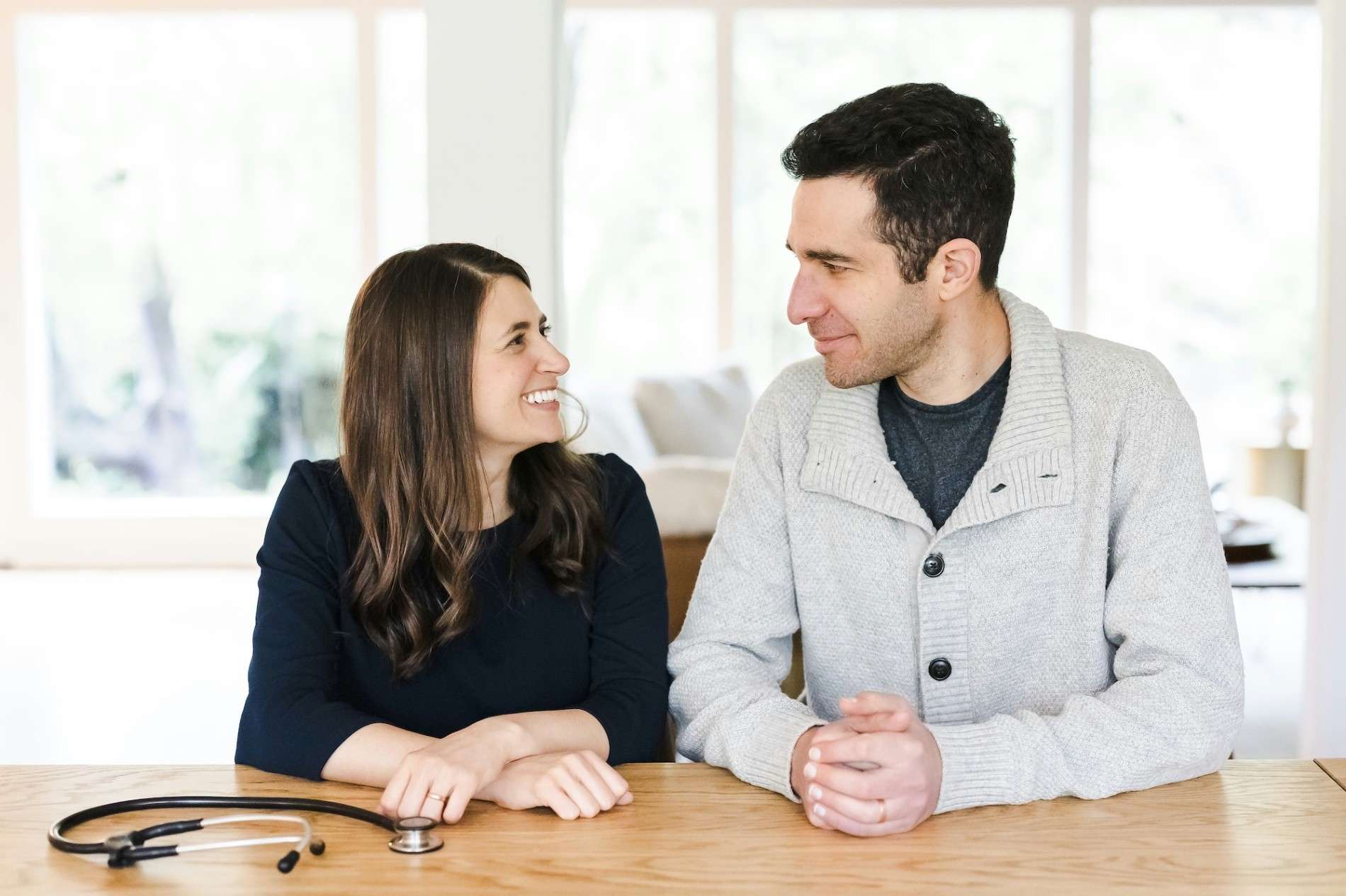
For years, Erez Druk watched his wife, Dr. Gabriella Meckler, come home and open her charts.
Patient after patient, note after note. Sometimes with friends over, on date nights – past midnight.
Erez knew what good software could do. He'd studied mathematics and computer science at the Technion — a top engineering university in Israel — finishing at the top of his class with both a bachelor's and master's degree.
Afterwards, he spent years as a software engineer at Facebook, where he helped build products used by billions of people.
It was at Facebook that Erez met Andrey Bannikov.
Andrey had studied computational mathematics at Moscow State University and would go on to spend nearly a decade at Facebook as a senior engineer. Erez calls him "the best engineer I've ever worked with."
After Facebook, Erez launched first startup. There, he learned something that shaped everything after: build for a user you understand deeply and personally care about.
That user was sitting across the dinner table every night, charting.
So in January 2023, Erez and Andrey co-founded Freed.
Growing momentum
Freed’s mission is to be a company that clinics and clinicians love.
It started with the AI scribe. Within four months of launch, 1,500 clinicians were using Freed for their notes, and Freed crossed $1.5M in annual revenue. Within the first two years, that number ballooned to 17,000 clinicians using and loving Freed.
In March 2025, Sequoia Capital led Freed's $30 million Series A, with participation from Scale Venture Partners, Daniel Gross, and Ted Zagat, bringing total funding to about $34 million.
Helping independent clinics thrive
Most health-tech companies focus on large hospital systems. But Freed was built for the clinics those companies ignore: independent and small-to-mid-sized local private practices where the doctor is often the owner, IT department, and decision-maker all at once.
In 2025, the platform processed 32.5 million patient visits and returned an estimated 5.9 million hours to clinicians — that's 2 to 3 hours back in a clinician's day, every day. Some practices went from a ten-day note closure turnaround down to just one.
Looking forward
26,000+ clinicians across 1,700+ clinics use Freed today. We’ve grown from an AI scribe to supporting front desk reception, coding, clinical evidence, visit prep automation and much more.
But the mission hasn't changed.
Freed began because one engineer watched someone he loved carry the weight of documentation and admin work.
That same belief guides everything we build — from AI-powered notes to the tools that support the entire clinical workflow.
We started by solving a problem for the people we love.
And each day, we're building a future where every part of a clinician's work feels simpler, faster, and more human.
FAQs
Frequently asked questions from clinicians and medical practitioners.

How can I get started with Freed?

What does Freed Front Desk do?
What is an AI scribe?
How much does Freed cost?



548 Market Street, PMB 95301
San Francisco, CA 94104
Specialties
Compliance & Security
Our technology is HIPAA-compliant, uses industry best practices, and doesn’t store patient recordings.