The Future of Clinical Documentation: Emerging Trends, Technologies, and Best Practices
When we talk about the future of clinical documentation, we don’t just mean time-saving tech. We're shifting the way that clinicians experience a workday.
AI scribes represent a healthcare system that puts clinicians first. After decades of adding administrative burden, healthcare documentation can be dynamic and streamlined, instead of a dreaded to-do list item that never gets completed.
The state of clinical documentation in 2026
Increased AI usage in clinical documentation
We’re at the crux of a clinical turning point. In 2019, 91% of surveyed EHR users reported HIT-related stress.
Fast-forward to 2025. In our own survey of 1,000 users, 77% still claimed paperwork as a heavy burden?
The difference is that now, nearly half of small practice respondents are using AI in some way — with 48% using it specifically for real-time notes and patient scribing.
AI in the context of clinical documentation improvement
Let’s pull back further. Clinical documentation improvement (or “clinical documentation integrity,”) is a systemic approach to creating and reviewing the medical record for better billing, clinical communication, and patient safety.
And for all intents and purposes, it’s a booming business. In 2024 the market value was estimated at USD 4.88 billion, and in 2025 it was predicted to increase from USD 5.26 billion to about USD 10.44 billion in 2034.
With it, AI scribing has gone from an edge case to a global standard. A real solution to an administrative burden that has been dropped on clinicians since the dawn of the EHR.
For clinicians, this means that there’s a never-ending list of note-taking options cluttering their algorithms. The question becomes not, “should I use an AI scribe,” but, “what is the best AI scribe for my practice, specialty, bandwidth, and note standards.”
The benefits of today’s AI scribes across specialties
In many ways, the future of clinical documentation has started today.
But the promise of ambient scribe technology only works if it fits real clinical contexts. Here’s how that plays out in practice.
Family medicine
Annual exams, chronic condition follow-ups, and preventive visits benefit from structured continuity.
AI listening technology surfaces relevant history, maintains consistent documentation patterns, and reduces the cognitive load of remembering what to include.
Pediatrics
Well-child visits require precise documentation of developmental milestones, growth metrics, and vaccine schedules.
Specialty-aware templates ensure nothing is missed while adapting naturally to how pediatricians actually speak with families.
Psychiatry and behavioral health
Here, control matters most. The ability to pause recording, exclude sensitive content, and carefully review narrative notes ensures AI supports therapeutic relationships rather than intruding on them.
Emergency medicine
In fast-paced ED environments, clinicians don’t have time to narrate for a recorder. Ambient AI scribes will:
- Capture fragmented, rapid conversations
- Triage details, consults, and reassessments
- Assemble the relevant information into coherent notes.
AI-driven documentation is no longer a novelty
AI clinical documentation is the standard. Modern AI scribes can turn spoken conversation into structured notes in seconds, understand medical terminology, recognize context, and suggest billing codes that match a clinician’s assessment.
The new generation of AI documentation is informed by:
- Voice‑first capture – the scribe listens while you examine, so you never lose eye contact.
- Specialty‑tuned models – algorithms learn the nuances of emergency medicine, primary care, surgery, and more.
- Continuous learning – the system improves with each encounter, reducing errors over time.
As the American Medical Association explains, training clinical AI models for accuracy depends on supervised learning with carefully labeled, real‑world health data:
“Supervised learning… involves computers learning from examples of correct predictions of outcomes of interest, with the goal of generating accurate predictions for new examples. Supervised learning requires labels and inputs: Labels describe what is being predicted, such as the presence or absence of a diagnosis, whereas inputs are made up of electronic health record data, omics, medical images and medical text.”
What “good” AI clinical documentation will look like in the future
The world of EHRs is a structured, templated terrain.
While that’s not changing (yet) — ambient clinical documentation tools are bridging the gap between chart fields and real clinical workflows.
This adaptation is building a standard where:
- Notes are generated from ambient audio and smart prompts, then molded by the clinician’s voice, style, and specialty.
- Documentation is instantly organized into the right format — like SOAP note structure, or pulling specialty-specific information
- Advanced AI scribes and clinical assistants like Freed are able to push notes directly into the EHR, mapping to sections with appropriate context
- The chart becomes a living longitudinal narrative that surfaces past conversations, goals, and trends exactly when they matter
The evolution of AI scribing and clinical AI
Early AI scribes focused on a single job: turning conversations into notes.
As Freed’s CEO has described, modern systems are beginning to act less like AI medical transcription tools and more like trained clinical assistants that automate your clinical workflow.
This is software that can safely operate inside existing workflows instead of forcing clinicians to adapt to new ones. One example is Freed’s EHR push technology, where AI doesn’t just create a note, but reliably places it into the correct sections of a browser-based EHR without copy-paste, manual mapping, or IT involvement.
This shift matters because it removes an entire category of friction. Instead of clinicians finishing a visit only to face another round of administrative cleanup, documentation becomes something that resolves itself as part of the visit lifecycle.
AI scribes will sit at the center of a broader ecosystem of clinical AI tools, acting as the connective tissue between human conversations and the rest of the clinician’s work day.
Notes produced by AI scribes will feed decision support, risk prediction, and population health analytics, without requiring clinicians to manually code every nuance of the visit.
As models improve, they’ll better capture social determinants, functional status, and patient‑reported outcomes, enriching the data needed for value‑based care and equity‑focused reporting.
💡 Read Freed’s CEO’s insights on the future of clinical AI
Workflow automation beyond the clinical note
The next generation of clinical AI doesn’t stop in the chart.
It reduces work across the entire clinical lifecycle — before, during, and after the patient encounter.
Here’s what that looks like in practice:
- Less prep before the visit
Instead of starting each encounter from a blank slate, clinicians can rely on AI to carry forward relevant context from prior visits — surfacing ongoing conditions, recent plans, and follow-ups that matter now. This reduces chart digging and helps clinicians walk into visits oriented, not already behind. - Fewer decisions during the visit
During the encounter, clinicians don’t need to think about structure, phrasing, or remembering every detail for later. Freed listens, understands clinical relevance, and captures the visit as it unfolds — allowing clinicians to stay present with patients rather than toggling between conversation and documentation in their head. - No cleanup after the visit
After the visit ends, there’s no separate documentation phase waiting to happen. Notes don’t need to be reworked, reformatted, or manually moved into the EHR. Follow-ups, instructions, and visit details are already accounted for, which means charts can be closed while the context is still fresh — or not revisited at all.
This leads to a fundamental shift in how work feels. Documentation no longer stretches across the day as background stress. It becomes something that resolves itself as part of care delivery.
And beyond this, tools like Freed are tackling other aspects of the workflow to guarantee the same seamless support.
The future of clinical documentation: A case study
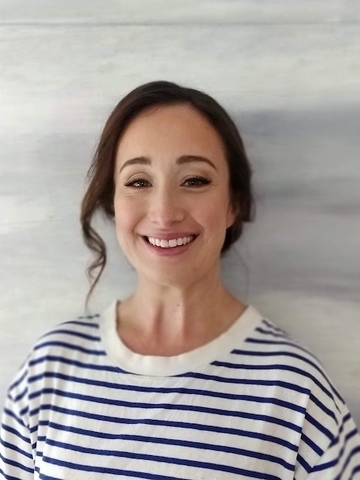
Dr. Cecily Kelly, a Texas practice owner seeing 270 patients weekly, used to stay 1-2 hours after her 5 PM clinic closing time with 10 of 20 charts still incomplete. She relied on a virtual assistant scribe but still spent half her lunch charting, and felt constantly behind despite the daily catch-up effort. The mental strain of holding patient details in her head while juggling interruptions and administrative duties as a practice owner meant she regularly brought work home.
With Freed, that has changed. Dr. Kelly now leaves when her last patient does, with all charts complete. AI clinical documentation captures everything during visits, including patient emotions and tone, so she doesn't have to mentally catalog details or reconstruct visits after interruptions.
Dr. Kelly uses visit summaries to instantly recall patient history across multi-generational families she's treated for decades, and can edit notes anywhere (even in line at the pharmacy) without carrying the mental context around.
Clinical AI safeguards, trust, and shared control
For this future to work, clinicians must remain in control of the record.
High‑quality AI scribe systems need intuitive controls to pause during sensitive moments, flag uncertain content, and require explicit sign‑off before anything is committed, so nothing enters the EHR without a clinician’s review.
That level of control only matters if it rests on serious security foundations. Key pillars include:
- End‑to‑end encryption for PHI, secure coding practices
- U.S‑only data hosting
- Continuous monitoring
- Robust compliance like HIPAA and HITECH alignment, SOC 2 Type 2 audits,and regular third‑party reviews
- Patient data deletion
- AI training on de-identified notes only
Security should be a culture, not just a feature list.
That means background‑checked team members, annual HIPAA and privacy training, 24/7 monitored infrastructure, and clear, patient‑friendly explanations of how AI scribes work. When clinicians can confidently tell patients, “This tool helps me listen better, and your data stays protected and under my control,” trust in AI‑assisted documentation becomes a shared asset rather than a silent risk.
A vision worth building toward
Done well, AI‑assisted documentation (and beyond) will give clinicians back meaningful time while producing richer, more structured data for everyone who relies on the chart.
The future of clinical documentation is about smarter, not harder. AI scribes are becoming the foundation for the next generation of clinical documentation, where the record finally works in service of the patient encounter rather than competing with it.
Ready to see how Freed can turn this future into your present? Learn how Freed’s AI scribe can streamline your notes today.

The Future of Clinical Documentation: Emerging Trends, Technologies, and Best Practices
Table of Contents
When we talk about the future of clinical documentation, we don’t just mean time-saving tech. We're shifting the way that clinicians experience a workday.
AI scribes represent a healthcare system that puts clinicians first. After decades of adding administrative burden, healthcare documentation can be dynamic and streamlined, instead of a dreaded to-do list item that never gets completed.
The state of clinical documentation in 2026
Increased AI usage in clinical documentation
We’re at the crux of a clinical turning point. In 2019, 91% of surveyed EHR users reported HIT-related stress.
Fast-forward to 2025. In our own survey of 1,000 users, 77% still claimed paperwork as a heavy burden?
The difference is that now, nearly half of small practice respondents are using AI in some way — with 48% using it specifically for real-time notes and patient scribing.
AI in the context of clinical documentation improvement
Let’s pull back further. Clinical documentation improvement (or “clinical documentation integrity,”) is a systemic approach to creating and reviewing the medical record for better billing, clinical communication, and patient safety.
And for all intents and purposes, it’s a booming business. In 2024 the market value was estimated at USD 4.88 billion, and in 2025 it was predicted to increase from USD 5.26 billion to about USD 10.44 billion in 2034.
With it, AI scribing has gone from an edge case to a global standard. A real solution to an administrative burden that has been dropped on clinicians since the dawn of the EHR.
For clinicians, this means that there’s a never-ending list of note-taking options cluttering their algorithms. The question becomes not, “should I use an AI scribe,” but, “what is the best AI scribe for my practice, specialty, bandwidth, and note standards.”
The benefits of today’s AI scribes across specialties
In many ways, the future of clinical documentation has started today.
But the promise of ambient scribe technology only works if it fits real clinical contexts. Here’s how that plays out in practice.
Family medicine
Annual exams, chronic condition follow-ups, and preventive visits benefit from structured continuity.
AI listening technology surfaces relevant history, maintains consistent documentation patterns, and reduces the cognitive load of remembering what to include.
Pediatrics
Well-child visits require precise documentation of developmental milestones, growth metrics, and vaccine schedules.
Specialty-aware templates ensure nothing is missed while adapting naturally to how pediatricians actually speak with families.
Psychiatry and behavioral health
Here, control matters most. The ability to pause recording, exclude sensitive content, and carefully review narrative notes ensures AI supports therapeutic relationships rather than intruding on them.
Emergency medicine
In fast-paced ED environments, clinicians don’t have time to narrate for a recorder. Ambient AI scribes will:
- Capture fragmented, rapid conversations
- Triage details, consults, and reassessments
- Assemble the relevant information into coherent notes.
AI-driven documentation is no longer a novelty
AI clinical documentation is the standard. Modern AI scribes can turn spoken conversation into structured notes in seconds, understand medical terminology, recognize context, and suggest billing codes that match a clinician’s assessment.
The new generation of AI documentation is informed by:
- Voice‑first capture – the scribe listens while you examine, so you never lose eye contact.
- Specialty‑tuned models – algorithms learn the nuances of emergency medicine, primary care, surgery, and more.
- Continuous learning – the system improves with each encounter, reducing errors over time.
As the American Medical Association explains, training clinical AI models for accuracy depends on supervised learning with carefully labeled, real‑world health data:
“Supervised learning… involves computers learning from examples of correct predictions of outcomes of interest, with the goal of generating accurate predictions for new examples. Supervised learning requires labels and inputs: Labels describe what is being predicted, such as the presence or absence of a diagnosis, whereas inputs are made up of electronic health record data, omics, medical images and medical text.”
What “good” AI clinical documentation will look like in the future
The world of EHRs is a structured, templated terrain.
While that’s not changing (yet) — ambient clinical documentation tools are bridging the gap between chart fields and real clinical workflows.
This adaptation is building a standard where:
- Notes are generated from ambient audio and smart prompts, then molded by the clinician’s voice, style, and specialty.
- Documentation is instantly organized into the right format — like SOAP note structure, or pulling specialty-specific information
- Advanced AI scribes and clinical assistants like Freed are able to push notes directly into the EHR, mapping to sections with appropriate context
- The chart becomes a living longitudinal narrative that surfaces past conversations, goals, and trends exactly when they matter
The evolution of AI scribing and clinical AI
Early AI scribes focused on a single job: turning conversations into notes.
As Freed’s CEO has described, modern systems are beginning to act less like AI medical transcription tools and more like trained clinical assistants that automate your clinical workflow.
This is software that can safely operate inside existing workflows instead of forcing clinicians to adapt to new ones. One example is Freed’s EHR push technology, where AI doesn’t just create a note, but reliably places it into the correct sections of a browser-based EHR without copy-paste, manual mapping, or IT involvement.
This shift matters because it removes an entire category of friction. Instead of clinicians finishing a visit only to face another round of administrative cleanup, documentation becomes something that resolves itself as part of the visit lifecycle.
AI scribes will sit at the center of a broader ecosystem of clinical AI tools, acting as the connective tissue between human conversations and the rest of the clinician’s work day.
Notes produced by AI scribes will feed decision support, risk prediction, and population health analytics, without requiring clinicians to manually code every nuance of the visit.
As models improve, they’ll better capture social determinants, functional status, and patient‑reported outcomes, enriching the data needed for value‑based care and equity‑focused reporting.
💡 Read Freed’s CEO’s insights on the future of clinical AI
Workflow automation beyond the clinical note
The next generation of clinical AI doesn’t stop in the chart.
It reduces work across the entire clinical lifecycle — before, during, and after the patient encounter.
Here’s what that looks like in practice:
- Less prep before the visit
Instead of starting each encounter from a blank slate, clinicians can rely on AI to carry forward relevant context from prior visits — surfacing ongoing conditions, recent plans, and follow-ups that matter now. This reduces chart digging and helps clinicians walk into visits oriented, not already behind. - Fewer decisions during the visit
During the encounter, clinicians don’t need to think about structure, phrasing, or remembering every detail for later. Freed listens, understands clinical relevance, and captures the visit as it unfolds — allowing clinicians to stay present with patients rather than toggling between conversation and documentation in their head. - No cleanup after the visit
After the visit ends, there’s no separate documentation phase waiting to happen. Notes don’t need to be reworked, reformatted, or manually moved into the EHR. Follow-ups, instructions, and visit details are already accounted for, which means charts can be closed while the context is still fresh — or not revisited at all.
This leads to a fundamental shift in how work feels. Documentation no longer stretches across the day as background stress. It becomes something that resolves itself as part of care delivery.
And beyond this, tools like Freed are tackling other aspects of the workflow to guarantee the same seamless support.
The future of clinical documentation: A case study
Dr. Cecily Kelly, a Texas practice owner seeing 270 patients weekly, used to stay 1-2 hours after her 5 PM clinic closing time with 10 of 20 charts still incomplete. She relied on a virtual assistant scribe but still spent half her lunch charting, and felt constantly behind despite the daily catch-up effort. The mental strain of holding patient details in her head while juggling interruptions and administrative duties as a practice owner meant she regularly brought work home.
With Freed, that has changed. Dr. Kelly now leaves when her last patient does, with all charts complete. AI clinical documentation captures everything during visits, including patient emotions and tone, so she doesn't have to mentally catalog details or reconstruct visits after interruptions.
Dr. Kelly uses visit summaries to instantly recall patient history across multi-generational families she's treated for decades, and can edit notes anywhere (even in line at the pharmacy) without carrying the mental context around.
Clinical AI safeguards, trust, and shared control
For this future to work, clinicians must remain in control of the record.
High‑quality AI scribe systems need intuitive controls to pause during sensitive moments, flag uncertain content, and require explicit sign‑off before anything is committed, so nothing enters the EHR without a clinician’s review.
That level of control only matters if it rests on serious security foundations. Key pillars include:
- End‑to‑end encryption for PHI, secure coding practices
- U.S‑only data hosting
- Continuous monitoring
- Robust compliance like HIPAA and HITECH alignment, SOC 2 Type 2 audits,and regular third‑party reviews
- Patient data deletion
- AI training on de-identified notes only
Security should be a culture, not just a feature list.
That means background‑checked team members, annual HIPAA and privacy training, 24/7 monitored infrastructure, and clear, patient‑friendly explanations of how AI scribes work. When clinicians can confidently tell patients, “This tool helps me listen better, and your data stays protected and under my control,” trust in AI‑assisted documentation becomes a shared asset rather than a silent risk.
A vision worth building toward
Done well, AI‑assisted documentation (and beyond) will give clinicians back meaningful time while producing richer, more structured data for everyone who relies on the chart.
The future of clinical documentation is about smarter, not harder. AI scribes are becoming the foundation for the next generation of clinical documentation, where the record finally works in service of the patient encounter rather than competing with it.
Ready to see how Freed can turn this future into your present? Learn how Freed’s AI scribe can streamline your notes today.
FAQs
Frequently asked questions from clinicians and medical practitioners.

How do AI scribes improve the future of clinical documentation?

Are AI scribes safe for sensitive patient information?
Who controls what goes into the chart when using an AI scribe?
How do AI scribes handle data retention and training?
What should organizations do now to prepare for the future of clinical documentation?
Related content
Free yourself for better things


548 Market Street, PMB 95301
San Francisco, CA 94104
Specialties
Compliance & Security
Our technology is HIPAA-compliant, uses industry best practices, and doesn’t store patient recordings.