5 Best Abridge Alternative for Independent Clinicians in 2026
Abridge is a well-regarded ambient AI clinical documentation tool, particularly for health systems that have the IT infrastructure and procurement budget to deploy it.
But for the independent physician, NP, or small-group practice, a growing number of clinicians are actively researching an Abridge alternative that better fits a solo or small-group budget, workflow, and timeline.
This guide breaks down what Abridge does well, why independent clinicians commonly look for alternatives, and rounds up the top options worth evaluating in 2026, ncluding specific features, real pricing, and where each one fits best.
Abridge alternatives: Comparison table at-a-glance
Pricing and feature availability change over time. Confirm current details on each vendor's site before deciding.
What Abridge does well
Abridge’s core product is strong. In published research, clinicians using the platform reported decreased documentation burden, less time documenting outside of clinical hours, and better support for patient-centered care. It is especially well-suited to complex specialty encounters, where a large volume of clinical information is discussed in a single visit.
Abridge is particularly well-suited to complex specialty encounters — cardiology, oncology, neurology — where the volume of clinical information discussed in a single visit is high. For health systems willing to negotiate enterprise pricing and integrate at the EHR level, Abridge can be a strong choice.
Why clinicians look for an Abridge alternative
Abridge has become a well-known name in medical documentation, especially among large health systems. But the needs of a 5,000-provider organization look very different from those of an independent clinician trying to save time between patients. For smaller practices, the biggest considerations often come down to affordability, flexibility, and how quickly a solution can fit into an existing workflow.
Enterprise focus vs. independent practice needs
Abridge's go-to-market is health systems and large medical groups. This shapes the product in ways that matter to independent clinicians:
- Pricing: Abridge does not publish public pricing. Access for individual physicians outside of a health system contract typically requires a direct sales conversation and an enterprise-level commitment.
- Contracting: Enterprise contracts often involve multi-year agreements and per-seat minimums that are difficult for solo or small-group practices to justify.
- Onboarding: Health system deployments involve IT integration, EHR configuration, and rollout support. It’s appropriate for that context, but unnecessary complexity for an independent practice that wants to start documenting today.
Pricing and contracting complexity
Independent clinicians comparing the cost of AI scribes quickly run into a wall when evaluating Abridge: there's no pricing to compare. The product may be excellent, but if you can't evaluate it affordably as a solo practitioner, it's effectively inaccessible.
This is the most common reason independent clinicians look for an Abridge alternative — not feature dissatisfaction, but an inability to access the product on reasonable terms.
Setup and IT requirements
Abridge's EHR integration model assumes a managed deployment environment.
For a solo practice on Athenahealth or eClinicalWorks that wants to try an AI scribe this week, Abridge's onboarding pathway isn't built for that use case.
What to look for in an Abridge alternative
Choosing an Abridge alternative is about finding one that fits the reality of your practice. Some that are considered to be the best AI scribes may not be right for your particular needs. For example, maybe a simple virtual medical scribe would do the job.
Independent clinicians typically need a solution that is flexible and easy to adopt without a health system’s IT resources or implementation timeline. The right alternative should deliver accurate documentation while fitting seamlessly into the way you already work.
Specialty template support
Abridge is strong on specialty documentation. An alternative should match this, or at least cover your specialty well. Look for documented support for your visit types, with templates you can evaluate during a free trial.
EHR integration options
Abridge integrates at the EHR API level for health system deployments. An alternative for independent practice should offer either direct EHR push via browser extension or a reliable copy-paste workflow that doesn't add friction.
Pricing transparency
The most important differentiator for independent practice use: does the vendor publish pricing? Can you start a trial without a sales call? Can you commit month-to-month without a contract?
Ease of onboarding
An Abridge alternative built for independent practice should be ready to use in under 30 minutes, with no IT involvement and no hardware.
Workflow automation beyond the note
The strongest Abridge alternatives do more than transcribe. Look for coding support (ICD-10 and CPT suggestions drawn from the visit context), pre-visit prep (AI-generated patient summaries and pulled-forward context before each encounter), and an AI chat for guideline-based questions with patient context built in.
Together these turn a scribe into an end-to-end visit assistant — and they're worth testing on your own visit types during a free trial.
One thing to check: these capabilities are often reserved for a vendor's higher tiers, so confirm which plan includes them before comparing prices.
5 Top Abridge alternatives compared
Choosing an alternative to Abridge often comes down less to note quality and more to access, pricing transparency, and speed of deployment.
The tools below reflect a mix of self-serve and enterprise-first options, with meaningful differences in cost structure, EHR integration depth, and suitability for independent versus health system–based clinicians.
1. Freed: Transparent pricing, purpose-built for independent practice
Pricing
Starter $39/month | Core $79/month | Premier $119/month ($104/month billed annually)
Overview
Freed is a widely used AI scribe for independent clinical practices, designed for clinicians who want to start documenting today rather than after a procurement process.
It produces structured SOAP notes across dozens of specialties and learns each clinician's style over time, so notes read the way you'd write them. For primary care, internal medicine, psychiatry, and general specialty visits, note quality is consistently strong.
Freed has also grown well beyond the note. Its Premier tier turns the scribe into more of an end-to-end visit assistant:
- Coding: ICD-10 and CPT code suggestions generated from the context of the visit, surfacing billing-relevant codes as you document instead of after the fact.
- Visit prep: AI-generated patient summaries and pulled-forward context before each visit, so you walk in prepared rather than digging through the chart.
- Clinical evidence: a clinician assistant backed by a medical knowledge base — ask clinical questions and get guideline-based answers with your patient's context built in.
Getting notes into your EHR is handled by Freed's EHR Push (its EHR Integrations Agent), which sends notes into browser-based EHRs with a single click. All individual tiers include a genuine 7-day free trial with no credit card required, and none require a long-term contract.
Most clinicians are up and documenting a real visit within about 30 minutes of signing up — no IT involvement and no hardware.
2. Nuance Dragon: Microsoft-backed, individual and enterprise tiers
Pricing
Individual plans available | Enterprise contracts unpublished
Overview
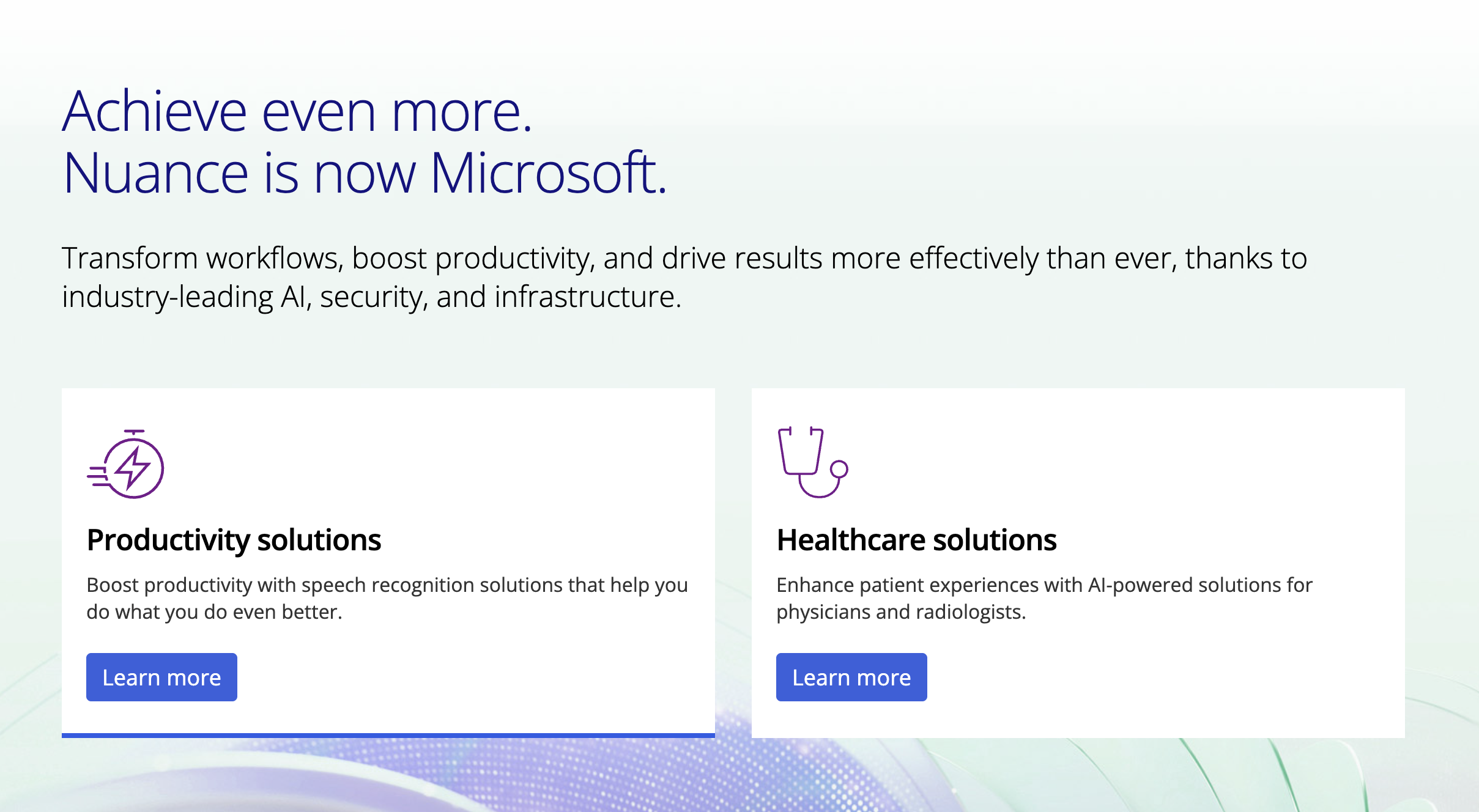
Microsoft's ambient AI documentation tool is well-regarded for complex specialties and, unlike Abridge, is available to individual clinicians in addition to enterprise deployments.
It's a reasonable option for clinicians who want a big-name, Epic-adjacent ecosystem, though it typically costs more per month than Freed's individual tiers and setup still tends to take longer than a self-serve tool.
Suki AI: Voice-first, deep EHR integration
Pricing
~$399/month
Overview
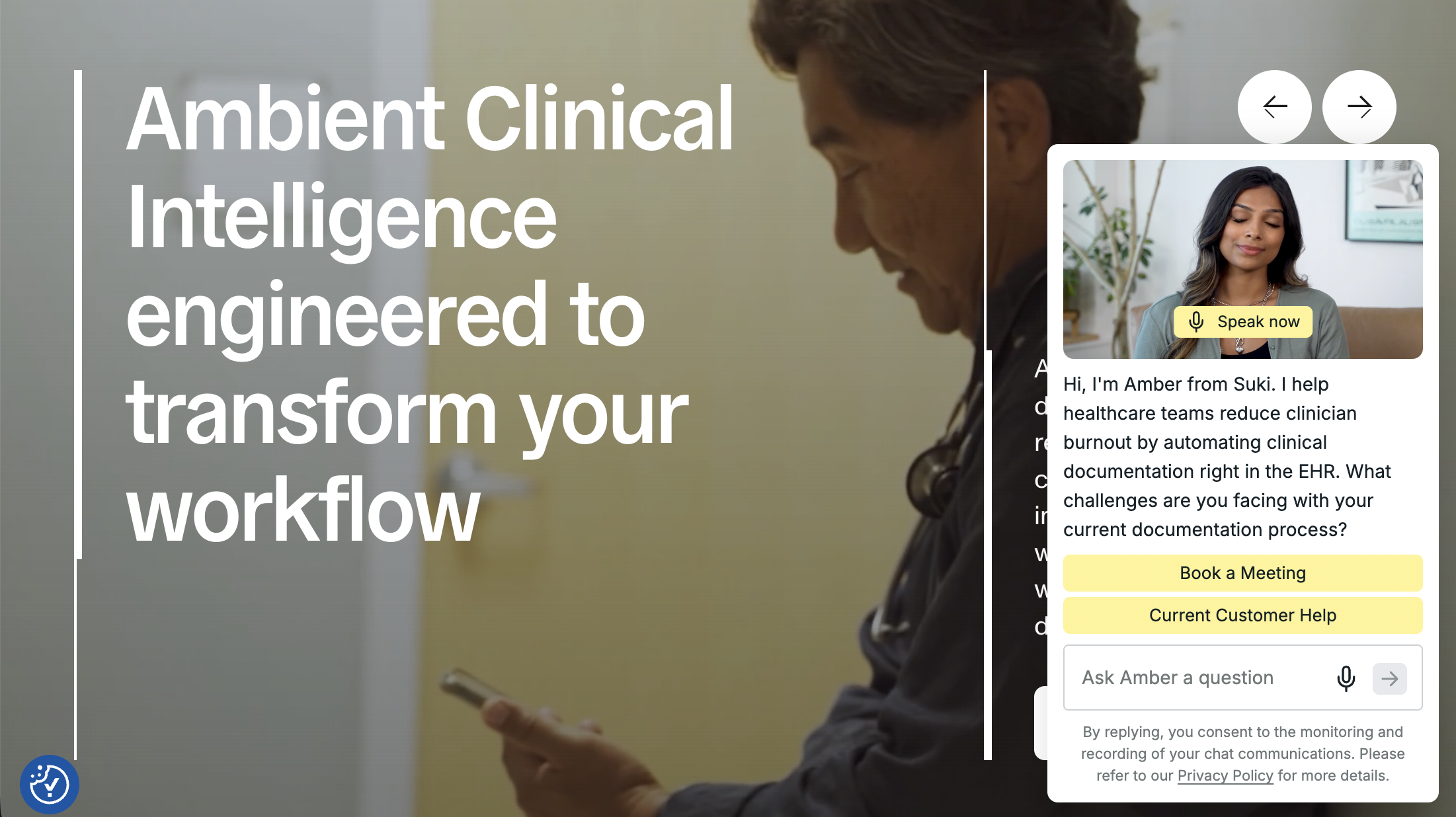
Suki is built around voice interaction and offers among the deepest native EHR integrations on the market, including bi-directional data exchange with major EHRs.
For practices that have already committed to a specific EHR ecosystem and want tight integration, Suki can embed directly into existing medical charting workflows. The trade-off is price: at roughly $399/month, Suki is a premium tool, most cost-effective for high-volume specialists rather than solo practices watching monthly overhead.
4. Nabla: Free tier, deep EHR integration, multilingual

Pricing
Free tier (up to ~30 notes/month) | Paid plans from ~$119/month | Enterprise custom
Overview
Nabla is a widely used ambient scribe with a genuinely accessible self-serve model — a free tier, fast setup, and paid plans an individual clinician can start without a sales process. Its standout strengths are deep, native EHR integrations across Epic, Oracle Health, athenahealth, NextGen, and 20+ others, real-time live transcription during the visit, and documentation in 35+ languages — making it a real option for multilingual practices and larger groups that need structured EHR write-back.
Where Freed tends to differentiate is note personalization and adaptive learning (notes that match how each clinician actually documents), overall note comprehensiveness, and depth of coding support (ICD-10, CPT, and evidence-linked coding).
For an independent clinician, the most useful comparison is a side-by-side on your own visits: note quality and customization versus integration depth and language breadth.
5. DeepScribe: Specialty-tuned for complex care
Pricing
$350–$750/month (enterprise contracts only)
Overview
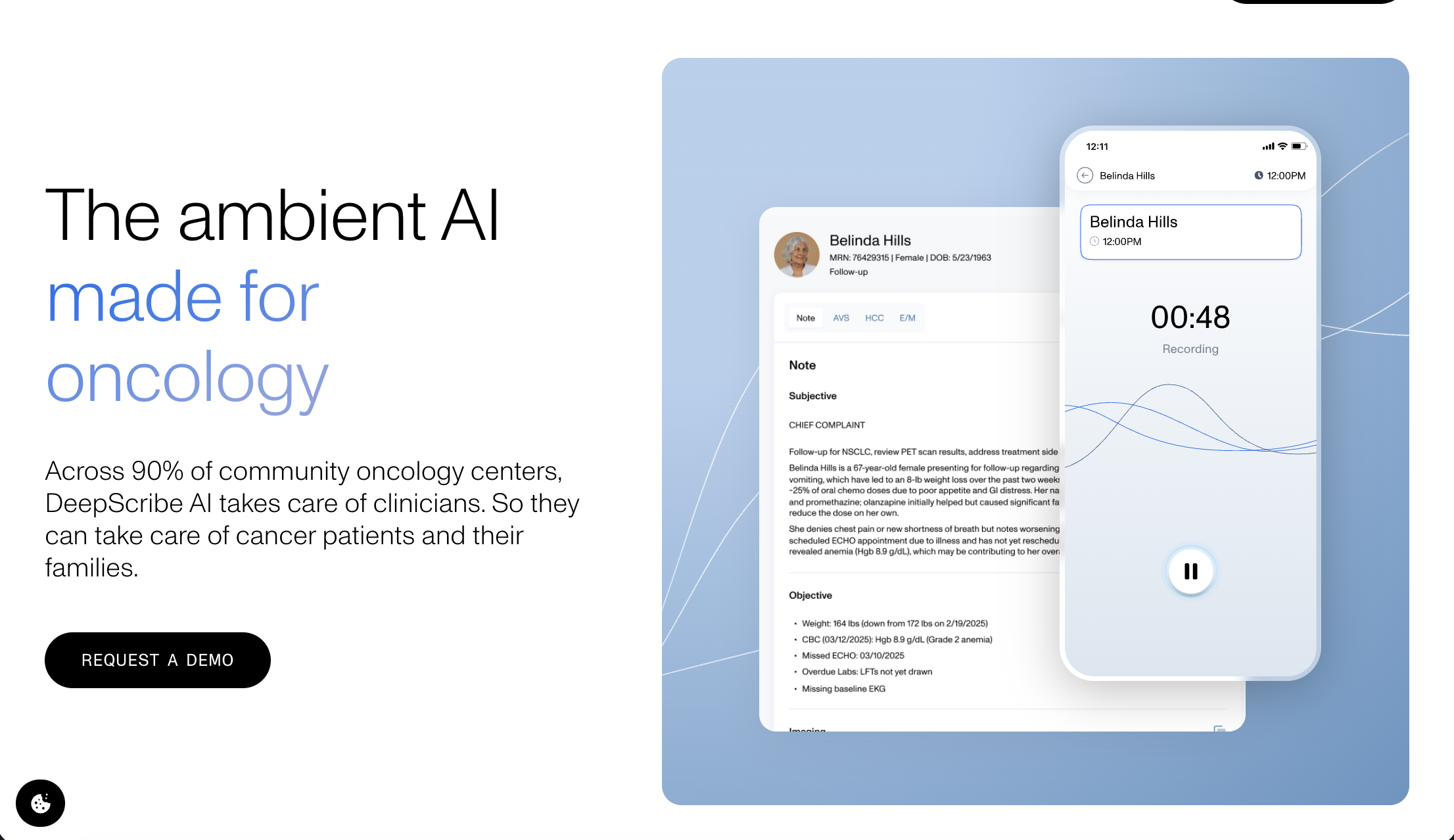
DeepScribe has invested heavily in specialty-specific AI models, particularly for oncology and complex procedural documentation, making it one of the few alternatives that matches Abridge's strength in high-acuity specialty visits.
The limitation is accessibility: DeepScribe is enterprise-only, with no self-serve sign-up or monthly plan for individual clinicians, and pricing ranges widely depending on contract terms and volume.
What clinicians say about switching from Abridge
The clinicians most likely to look for an Abridge alternative aren't dissatisfied with note quality. They're independent practitioners who never had a realistic path to using Abridge in the first place. In online clinician communities, the recurring theme isn't "Abridge doesn't work," it's "I couldn't get pricing" or "my practice is too small for their sales process."
Solo and small-group clinicians who switch to a self-serve tool like Freed tend to describe the difference in terms of access rather than raw feature comparison: they could start a trial the same day they heard about the product, see the price before committing to anything, and cancel without a contract if it wasn't a fit.
That accessibility is the biggest theme in clinician feedback on Abridge alternatives, more so than any single feature gap.
Clinicians who've used both tools generally agree Abridge's note quality is excellent, especially for complex specialty visits. But for a physician documenting routine primary care or behavioral health encounters, the practical question is which tool they can actually:
- Get access to
- Understand the cost of
- Start using this week
For most independent clinicians evaluating an Abridge alternative, that question resolves in favor of a self-serve, transparently priced option.
How to choose the right Abridge alternative
Choosing an Abridge alternative isn't about finding the "best" tool on the market, it's about matching the tool to your specific practice context:
- Solo or small group that wants transparent pricing and a self-serve trial today: Freed offers the most complete feature set at the most transparent price point, with no sales call required.
- Health system already invested in the Microsoft or Epic ecosystem: Nuance DAX Express is the path of least IT resistance, assuming your organization has the procurement infrastructure.
- High-volume specialist wanting a voice-native workflow with deep EHR integration: Suki's depth of integration may justify the premium price.
- Practice that needs deep native EHR integration (especially Epic), multilingual documentation, or real-time live transcription: Nabla is self-serve and accessible, with a free tier and 35+ language support — and it's strongest when native EHR write-back or multilingual visits are core requirements.
- Oncology or another highly complex specialty, with an enterprise budget: DeepScribe matches Abridge's strength in high-acuity documentation, though it carries the same enterprise-only accessibility trade-off.
The clinicians most likely to look for an Abridge alternative aren't dissatisfied with note quality — they're independent practitioners who never had a realistic path to using Abridge in the first place.
For most independent clinicians who want reliable clinical documentation with transparent pricing and no procurement process, Freed addresses the specific gaps that make clinicians search for an Abridge alternative in the first place.
Ready to try an Abridge alternative?
Try Freed free for 7 days — no credit card, no contract.

5 Best Abridge Alternative for Independent Clinicians in 2026

Table of Contents
Abridge is a well-regarded ambient AI clinical documentation tool, particularly for health systems that have the IT infrastructure and procurement budget to deploy it.
But for the independent physician, NP, or small-group practice, a growing number of clinicians are actively researching an Abridge alternative that better fits a solo or small-group budget, workflow, and timeline.
This guide breaks down what Abridge does well, why independent clinicians commonly look for alternatives, and rounds up the top options worth evaluating in 2026, ncluding specific features, real pricing, and where each one fits best.
Abridge alternatives: Comparison table at-a-glance
Pricing and feature availability change over time. Confirm current details on each vendor's site before deciding.
What Abridge does well
Abridge’s core product is strong. In published research, clinicians using the platform reported decreased documentation burden, less time documenting outside of clinical hours, and better support for patient-centered care. It is especially well-suited to complex specialty encounters, where a large volume of clinical information is discussed in a single visit.
Abridge is particularly well-suited to complex specialty encounters — cardiology, oncology, neurology — where the volume of clinical information discussed in a single visit is high. For health systems willing to negotiate enterprise pricing and integrate at the EHR level, Abridge can be a strong choice.
Why clinicians look for an Abridge alternative
Abridge has become a well-known name in medical documentation, especially among large health systems. But the needs of a 5,000-provider organization look very different from those of an independent clinician trying to save time between patients. For smaller practices, the biggest considerations often come down to affordability, flexibility, and how quickly a solution can fit into an existing workflow.
Enterprise focus vs. independent practice needs
Abridge's go-to-market is health systems and large medical groups. This shapes the product in ways that matter to independent clinicians:
- Pricing: Abridge does not publish public pricing. Access for individual physicians outside of a health system contract typically requires a direct sales conversation and an enterprise-level commitment.
- Contracting: Enterprise contracts often involve multi-year agreements and per-seat minimums that are difficult for solo or small-group practices to justify.
- Onboarding: Health system deployments involve IT integration, EHR configuration, and rollout support. It’s appropriate for that context, but unnecessary complexity for an independent practice that wants to start documenting today.
Pricing and contracting complexity
Independent clinicians comparing the cost of AI scribes quickly run into a wall when evaluating Abridge: there's no pricing to compare. The product may be excellent, but if you can't evaluate it affordably as a solo practitioner, it's effectively inaccessible.
This is the most common reason independent clinicians look for an Abridge alternative — not feature dissatisfaction, but an inability to access the product on reasonable terms.
Setup and IT requirements
Abridge's EHR integration model assumes a managed deployment environment.
For a solo practice on Athenahealth or eClinicalWorks that wants to try an AI scribe this week, Abridge's onboarding pathway isn't built for that use case.
What to look for in an Abridge alternative
Choosing an Abridge alternative is about finding one that fits the reality of your practice. Some that are considered to be the best AI scribes may not be right for your particular needs. For example, maybe a simple virtual medical scribe would do the job.
Independent clinicians typically need a solution that is flexible and easy to adopt without a health system’s IT resources or implementation timeline. The right alternative should deliver accurate documentation while fitting seamlessly into the way you already work.
Specialty template support
Abridge is strong on specialty documentation. An alternative should match this, or at least cover your specialty well. Look for documented support for your visit types, with templates you can evaluate during a free trial.
EHR integration options
Abridge integrates at the EHR API level for health system deployments. An alternative for independent practice should offer either direct EHR push via browser extension or a reliable copy-paste workflow that doesn't add friction.
Pricing transparency
The most important differentiator for independent practice use: does the vendor publish pricing? Can you start a trial without a sales call? Can you commit month-to-month without a contract?
Ease of onboarding
An Abridge alternative built for independent practice should be ready to use in under 30 minutes, with no IT involvement and no hardware.
Workflow automation beyond the note
The strongest Abridge alternatives do more than transcribe. Look for coding support (ICD-10 and CPT suggestions drawn from the visit context), pre-visit prep (AI-generated patient summaries and pulled-forward context before each encounter), and an AI chat for guideline-based questions with patient context built in.
Together these turn a scribe into an end-to-end visit assistant — and they're worth testing on your own visit types during a free trial.
One thing to check: these capabilities are often reserved for a vendor's higher tiers, so confirm which plan includes them before comparing prices.
5 Top Abridge alternatives compared
Choosing an alternative to Abridge often comes down less to note quality and more to access, pricing transparency, and speed of deployment.
The tools below reflect a mix of self-serve and enterprise-first options, with meaningful differences in cost structure, EHR integration depth, and suitability for independent versus health system–based clinicians.
1. Freed: Transparent pricing, purpose-built for independent practice
Pricing
Starter $39/month | Core $79/month | Premier $119/month ($104/month billed annually)
Overview
Freed is a widely used AI scribe for independent clinical practices, designed for clinicians who want to start documenting today rather than after a procurement process.
It produces structured SOAP notes across dozens of specialties and learns each clinician's style over time, so notes read the way you'd write them. For primary care, internal medicine, psychiatry, and general specialty visits, note quality is consistently strong.
Freed has also grown well beyond the note. Its Premier tier turns the scribe into more of an end-to-end visit assistant:
- Coding: ICD-10 and CPT code suggestions generated from the context of the visit, surfacing billing-relevant codes as you document instead of after the fact.
- Visit prep: AI-generated patient summaries and pulled-forward context before each visit, so you walk in prepared rather than digging through the chart.
- Clinical evidence: a clinician assistant backed by a medical knowledge base — ask clinical questions and get guideline-based answers with your patient's context built in.
Getting notes into your EHR is handled by Freed's EHR Push (its EHR Integrations Agent), which sends notes into browser-based EHRs with a single click. All individual tiers include a genuine 7-day free trial with no credit card required, and none require a long-term contract.
Most clinicians are up and documenting a real visit within about 30 minutes of signing up — no IT involvement and no hardware.
2. Nuance Dragon: Microsoft-backed, individual and enterprise tiers
Pricing
Individual plans available | Enterprise contracts unpublished
Overview
Microsoft's ambient AI documentation tool is well-regarded for complex specialties and, unlike Abridge, is available to individual clinicians in addition to enterprise deployments.
It's a reasonable option for clinicians who want a big-name, Epic-adjacent ecosystem, though it typically costs more per month than Freed's individual tiers and setup still tends to take longer than a self-serve tool.
Suki AI: Voice-first, deep EHR integration
Pricing
~$399/month
Overview
Suki is built around voice interaction and offers among the deepest native EHR integrations on the market, including bi-directional data exchange with major EHRs.
For practices that have already committed to a specific EHR ecosystem and want tight integration, Suki can embed directly into existing medical charting workflows. The trade-off is price: at roughly $399/month, Suki is a premium tool, most cost-effective for high-volume specialists rather than solo practices watching monthly overhead.
4. Nabla: Free tier, deep EHR integration, multilingual
Pricing
Free tier (up to ~30 notes/month) | Paid plans from ~$119/month | Enterprise custom
Overview
Nabla is a widely used ambient scribe with a genuinely accessible self-serve model — a free tier, fast setup, and paid plans an individual clinician can start without a sales process. Its standout strengths are deep, native EHR integrations across Epic, Oracle Health, athenahealth, NextGen, and 20+ others, real-time live transcription during the visit, and documentation in 35+ languages — making it a real option for multilingual practices and larger groups that need structured EHR write-back.
Where Freed tends to differentiate is note personalization and adaptive learning (notes that match how each clinician actually documents), overall note comprehensiveness, and depth of coding support (ICD-10, CPT, and evidence-linked coding).
For an independent clinician, the most useful comparison is a side-by-side on your own visits: note quality and customization versus integration depth and language breadth.
5. DeepScribe: Specialty-tuned for complex care
Pricing
$350–$750/month (enterprise contracts only)
Overview
DeepScribe has invested heavily in specialty-specific AI models, particularly for oncology and complex procedural documentation, making it one of the few alternatives that matches Abridge's strength in high-acuity specialty visits.
The limitation is accessibility: DeepScribe is enterprise-only, with no self-serve sign-up or monthly plan for individual clinicians, and pricing ranges widely depending on contract terms and volume.
What clinicians say about switching from Abridge
The clinicians most likely to look for an Abridge alternative aren't dissatisfied with note quality. They're independent practitioners who never had a realistic path to using Abridge in the first place. In online clinician communities, the recurring theme isn't "Abridge doesn't work," it's "I couldn't get pricing" or "my practice is too small for their sales process."
Solo and small-group clinicians who switch to a self-serve tool like Freed tend to describe the difference in terms of access rather than raw feature comparison: they could start a trial the same day they heard about the product, see the price before committing to anything, and cancel without a contract if it wasn't a fit.
That accessibility is the biggest theme in clinician feedback on Abridge alternatives, more so than any single feature gap.
Clinicians who've used both tools generally agree Abridge's note quality is excellent, especially for complex specialty visits. But for a physician documenting routine primary care or behavioral health encounters, the practical question is which tool they can actually:
- Get access to
- Understand the cost of
- Start using this week
For most independent clinicians evaluating an Abridge alternative, that question resolves in favor of a self-serve, transparently priced option.
How to choose the right Abridge alternative
Choosing an Abridge alternative isn't about finding the "best" tool on the market, it's about matching the tool to your specific practice context:
- Solo or small group that wants transparent pricing and a self-serve trial today: Freed offers the most complete feature set at the most transparent price point, with no sales call required.
- Health system already invested in the Microsoft or Epic ecosystem: Nuance DAX Express is the path of least IT resistance, assuming your organization has the procurement infrastructure.
- High-volume specialist wanting a voice-native workflow with deep EHR integration: Suki's depth of integration may justify the premium price.
- Practice that needs deep native EHR integration (especially Epic), multilingual documentation, or real-time live transcription: Nabla is self-serve and accessible, with a free tier and 35+ language support — and it's strongest when native EHR write-back or multilingual visits are core requirements.
- Oncology or another highly complex specialty, with an enterprise budget: DeepScribe matches Abridge's strength in high-acuity documentation, though it carries the same enterprise-only accessibility trade-off.
The clinicians most likely to look for an Abridge alternative aren't dissatisfied with note quality — they're independent practitioners who never had a realistic path to using Abridge in the first place.
For most independent clinicians who want reliable clinical documentation with transparent pricing and no procurement process, Freed addresses the specific gaps that make clinicians search for an Abridge alternative in the first place.
Ready to try an Abridge alternative?
Try Freed free for 7 days — no credit card, no contract.
FAQs
Frequently asked questions from clinicians and medical practitioners.

What is the best Abridge alternative for a small private practice?

How does Freed compare to Abridge on documentation quality?
What workflow automation features should I look for in an Abridge alternative?
Is there an Abridge alternative with transparent pricing?
How do AI scribes handle complex specialties as an Abridge alternative?
Related content
Free yourself for better things


548 Market Street, PMB 95301
San Francisco, CA 94104
Specialties
Compliance & Security
Our technology is HIPAA-compliant, uses industry best practices, and doesn’t store patient recordings.